
Twinkleby Review: The Relaxing Interlude We All Needed

TAKEAWAYS

  • Adorable style fits the gameplay loop perfectly
  • Customization and decoration option are abundant and intuitive
  • There’s just enough mystery and discovery to motivate progress

REVIEW

For better or worse, I often find myself playing a lot of taxing games. Whether it be the psychological demands of something like Silent Hill f or the manual dexterity required for most of UFO 50, it can be exhausting! Maybe that’s why Twinkleby, the new super chill home decorator from developer Might and Delight, hit me like a cotton-filled brick. 

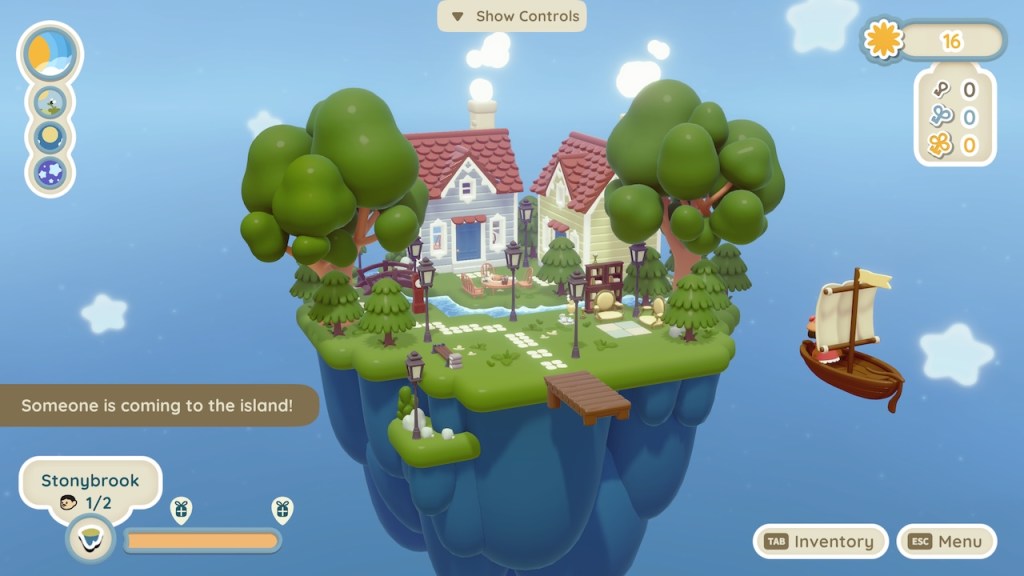
Like a concentrated dose of the more purely decorative and community-driven elements of Animal Crossing, Twinkleby plops you right in its sky-high world for some much needed relaxation. You start with a single island in the sky, on which you’ll find a quaint little house. You can take your starting assortment of furniture and accent items and arrange them as you see fit, and before you know it a chime will sound and your first neighbor will ferry their way to the island to check out their potential new home.

Come on over, why don’tcha

Once you have that island sorted, another opens up, this time with more expansive options. Two homes can be placed on the second island, and as such you’ll soon be able to welcome two more neighbors. Take their luggage and place it anywhere within a house and wa-lah, that house is now a home! As the loop continues, you’ll find yourself unlocking an archipelago of decorative delights, with a massive amount of customization available through a cute and intuitive interface.

Throughout the process you’ll also find the store loaded up with more items to purchase. The currency you use is obtained through casual play, so there’s no pressure to perform certain actions or wait out some arbitrary in-game timer. The whole thing is as calm as it presents itself to be, and there’s something in Twinkleby even for those who don’t normally fancy themselves the interior decorating type.

It’s impossible to get lost in this game, unless you’re this guy probably

READ: Öoo Review: An Explosively Fun, Bite-Size Journey

It was the overall interface and presentation that kept me booting up Twinkleby on a mostly daily basis. From the music to the adorable neighbors, especially the charming little jingle that plays whenever a new one arrives, it’s a world that just feels good to live in from time to time.

There’s even something for folks here who fancy themselves the indecisive type. If at any point you don’t like what you’ve done with one of your houses, for instance, you can easily strip the interior bare and start all over. Better yet, you can just yeet the entire house off the island into oblivion… AKA your inventory. Everything you dump into space ends up back in your virtual pocket, making for a nice visual representation of what would otherwise amount to rote inventory management.

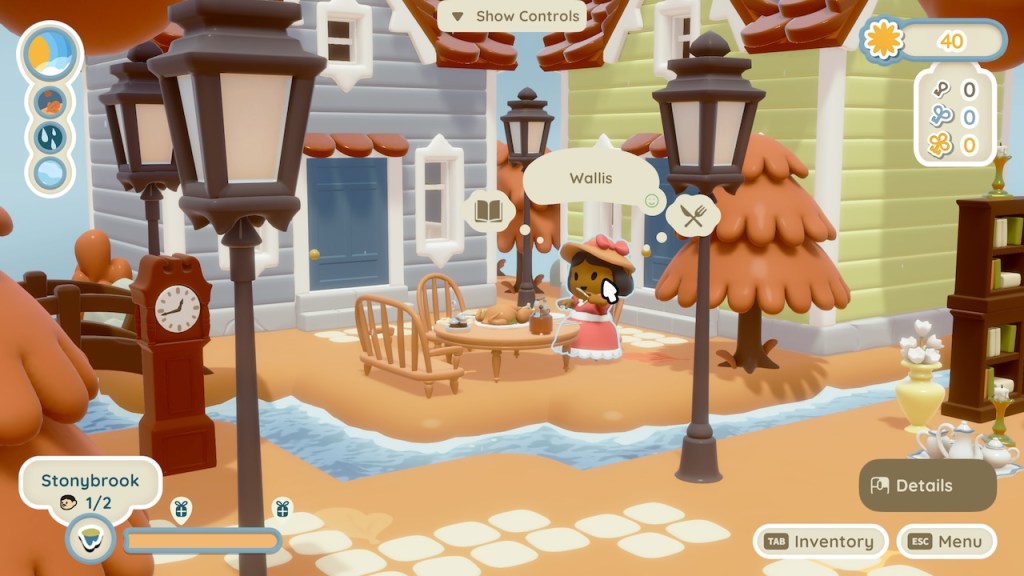
Got enough street lights, my dear?

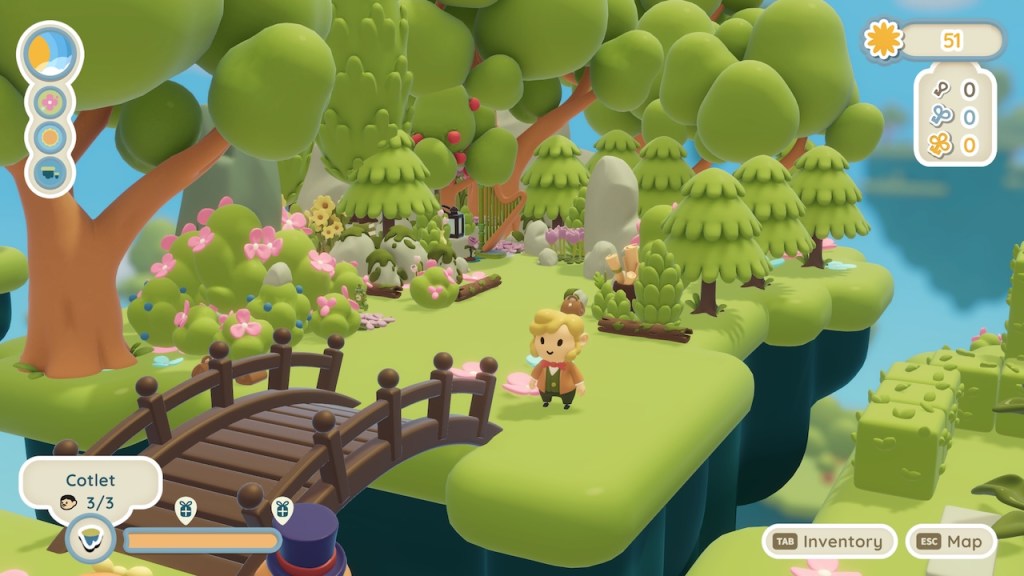
You can even change the seasons as you open up new areas, leading to tiered winter wonderlands, or orange and yellow landscapes of autumnal bliss. It’s not all going to be something brand new to longtime fans of the genre, but when it comes together under this particular umbrella, it’s fairly magical. 

If you’re looking for a snappier take on this type of game, though, this is most definitely not it. There are a few quirks that could lead to frustration depending on your play style, from the inability to orient certain items exactly how you’d like to the generally slow reaction time of the neighbors. And unless you fully ignore their movements, you’ll find them regularly shattering the illusion of having their own unique homes as they keep wandering into everyone else’s. These are minor quibbles that don’t detract from an otherwise enchanting experience. Neighbors can be quite nosy in real life, after all.

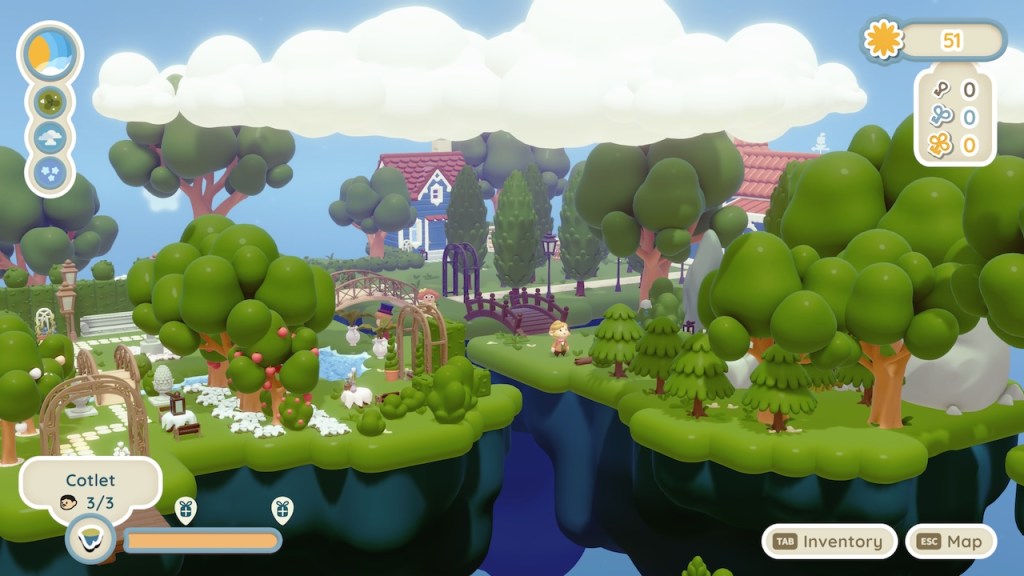
Just another beautiful day in a meticulously groomed summer garden

There’s no dark underbelly to be found here. There’s no turning point at which your villagers show their true demonic nature and initiate a hellish avalanche of turn-based battles. Twinkleby is exactly what it looks like, and the absolute worst thing you can do is evict a neighbor by tossing their belongings into the great beyond, which tells them it’s time to hit the bricks. It may sound cruel, but every so often a difficult decision must be made. If that’s what it takes to live a peaceful life in this idyllic world of dollhouse delights, then so be it.  

Platforms: PC (Steam)
Publisher: Might and Delight
Developer: Might and Delight
Available: Now

Bloodthief Review: Old School Dash ’n Slash Parkour

TAKEAWAYS

  • Action is extremely fast-paced and stylish
  • Throwback visuals end up being more evocative than expected
  • Checkpoint system is all about perfecting individual actions

REVIEW

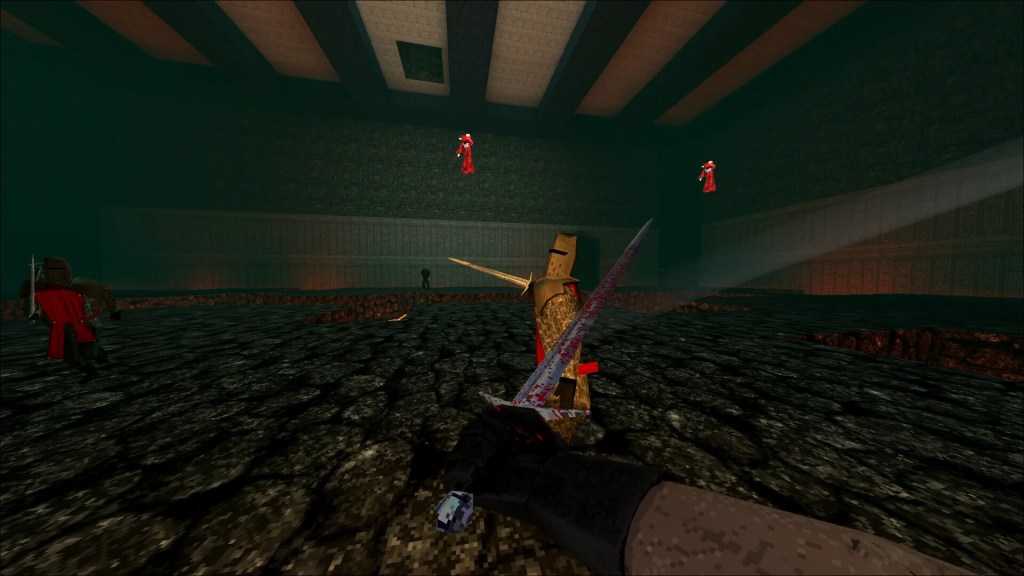
Can you refer to a game as a “boomer shooter” when there’s little to no shooting involved? I’m not terribly fond of the genre distinction myself, but if it sets the stage for the type of visuals you’ll be treated to in Bloodthief, then so be it. The first-person action game from Blargis is much more than that its throwback, low-poly style, though. It’s a fast-paced, melee-centric parkour action game more in line with something like Ghostrunner, and it’s a thrill to try to top yourself as you get deeper and deeper into its challenging campaign. 

True to its name, Bloodthief has you slashing away with your sword to steal the blood of your enemies, which replenishes a constantly depleting blood indicator on your HUD. When it’s empty, just one hit will kill you, and you won’t be able to pull off all of your sweet parkour moves. The more blood you have, whether attained from enemies or vials littering the environment, the stronger you are and the more capable you’ll be at overcoming the many obstacles along the way.

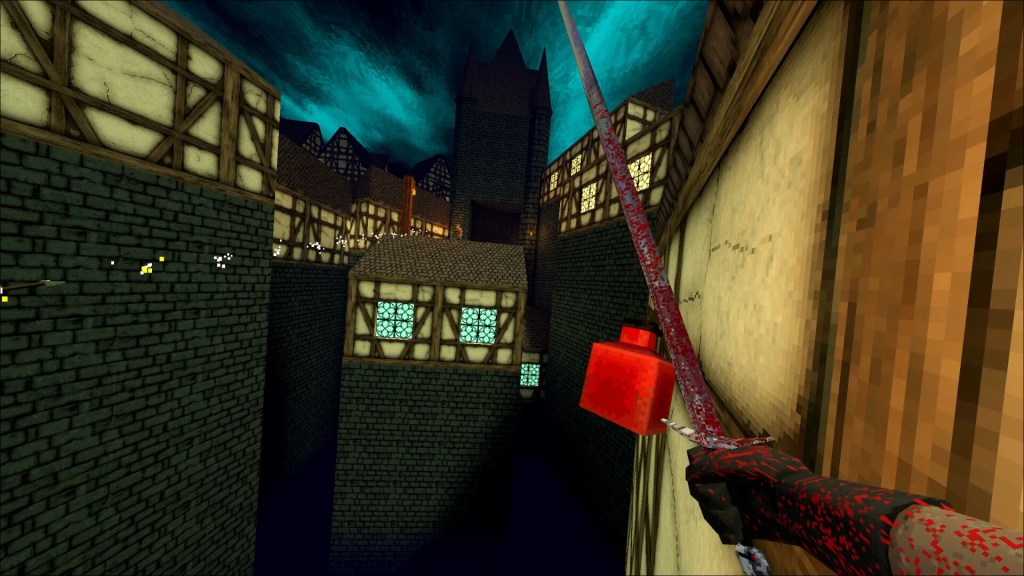
Caught my man wall-runnin’ again

Bloodthief does a decent job of lightly tutorializing the essential tricks throughout the run. Mastering the controls takes time, though, from figuring out the nuances of wall-running to nailing the rhythm of ground-pounding and sliding to build momentum and blaze an even faster trail through each stage. Throw in the ability to spend blood to home in on a specific target and you have everything you need to make short work of the trials to come… if you’re good enough.

Checkpoints are typically situated right before the most notorious sections in each level, so it quickly becomes a game of patience that rewards focus and the willingness to make just one more earnest attempt. “This time,” you say as you inhale deeply, “this time I’ll wall-run at just the right height to pick up those blood vials and air-dash into the black wizard protecting those crossbow archers on the top ledge.” And hey, after that, there’s always a next time.

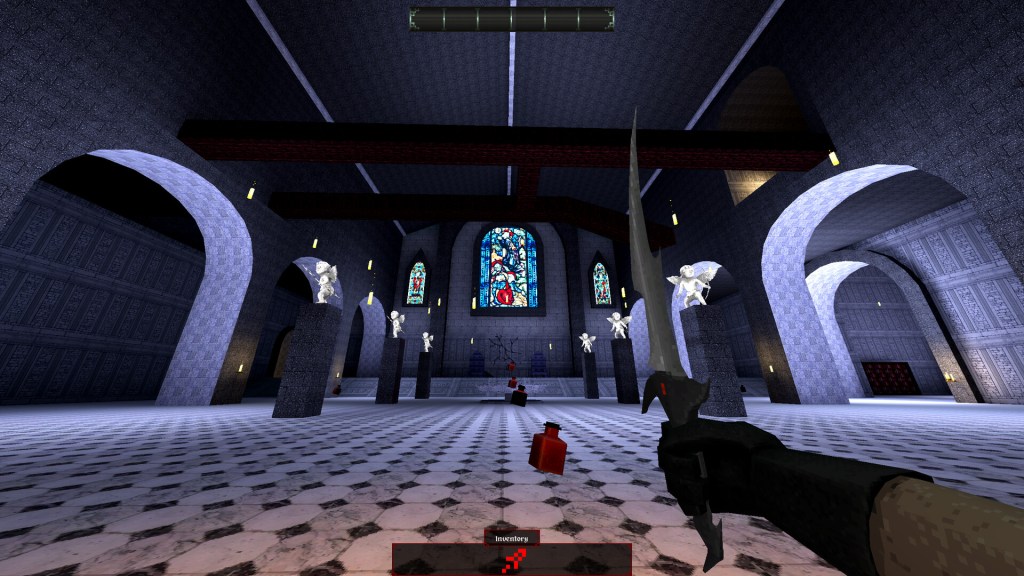
This doesn’t look foreboding at all

READ: Star Fire: Eternal Cycle Review: Roguelite Loot Galore

There’s also a fun parry system in the mix, which gives you a boosted blood reward and makes it much easier to deal with enemies like archers and the spell-casting white wizards. Every now and again you’ll really hit a sweet spot where everything clicks. There’s nothing like going back to a previous stage and playing all the right notes; making short work of something that gave you a major headache mere hours ago.

If it’s not already abundantly clear, Bloodthief is tailor-made for speedrunning. It lives the “gotta go fast” dream in full, and levels can’t just be conquered with style at the hands of an expert, they can be positively obliterated. Even if you never reach those lofty heights, it’s more than worth seeking out videos of those who manage to do so. It might inspire you to play harder and pick up some tricks that will make your medieval life just a little bit easier.

This knave’s about to taste the blade

There are a bunch of extras to consider in Bloodthief, from hidden secrets to speed ranking medals and a leveling system that introduces further rewards. You can even use a special item to race your own ghost through each map. At some points, you might find yourself hitting a wall that requires you to be a certain level before you can continue on to the next set of stages. This can be kind of a drag the first time it happens, but it ended up making me a better player in the long run. When I got first got clocked at level 15 and was told I needed to be level 18 to progress, I immediately started the first stages again and felt like a minor god.

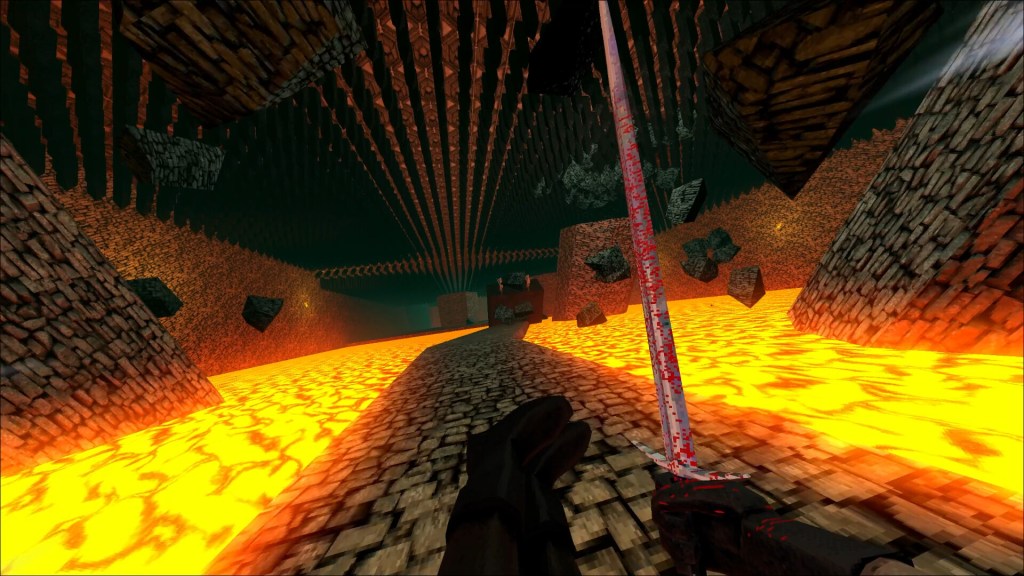
Setbacks like that are what prepared me for the moment I had to slide down an incline, firing explosive crossbow bolts and blowing up walls while a spiked ceiling came crashing down on me, forcing me to vault in the air above a lava pit and careen through another set of spike walls closing in from either side. That breathless run-on description covers a single fifteen-second event that could only happen in this specific game.

Nothing to worry about here

There are a small handful of stages here that I never want to play again; mostly in the form of exhausting enemy arenas that require you to practically stay airborne the entire time to survive. Vaulting those hurdles was still a thrill in the end, however, and that’s my main takeaway from my time with Bloodthief. Blargis has crafted something really special, and it has the potential to develop a fun community around it with the kind of speed tech that’s already, quite frankly, scary as hell. 

Platforms: PC (Steam)
Publisher: Blargis
Developer: Blargis
Available: Now

Star Fire: Eternal Cycle Review: Roguelite Loot Galore


TAKEAWAYS

  • The loop is satisfying and expands at a decent pace
  • The early going can be tough (but fair) until you unlock more weapons
  • Enjoyment lives or dies based on how well you mesh with the designs


REVIEW

Fans of almost any genre have a roguelite equivalent they can flock to at this point, and another recently dropped for those who love side-scrolling beat ‘em ups. Star Fire: Eternal Cycle is a roguelite action game that prioritizes fast-paced, room-clearing combat and a gradual progression built upon a pathway littered with character-buffing pickups.

For the most part, Star Fire pulls off everything it’s aiming for with aplomb. Right out of the gate, developer Ethereal Fish Studio promises a streamlined experience that doesn’t get too complicated, and simplicity is definitely the name of the game here. If you’re new to the genre you may initially be overwhelmed with all the pop-ups that appear whenever you grab an item that can take your build down a new path, but it’s all fairly straightforward, leaning into the unpredictability that makes roguelites attractive in the first place.


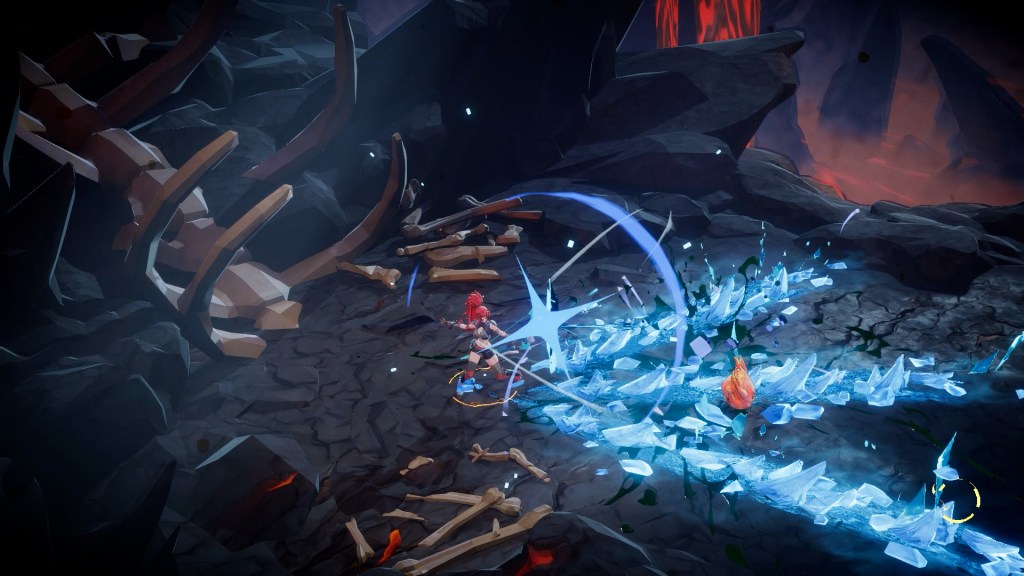
Combat is built around a succession of light attacks and special moves that have a forgiving rate of recharge that can be further adjusted depending on the buffs you grab along the way. Enemies typically project their attack through visual cues, so you’re never truly caught off guard as long as you pay attention to the on-screen directional indicator. In a crunchier and more methodically-paced game, these hand-to-hand-(to-axe-to-flamethrower-etc) encounters might become a slog. Here, thankfully, movements and attacks are efficient enough to quickly dispatch almost anything.


READ: Öoo Review: An Explosively Fun, Bite-Size Journey


Elite and boss encounters will test your build more than your personal skills. Sure, you could brute force your way through a combination of well-timed attacks and perfect dodges—which, when executed just right, initiate a brief burst of slow-motion action—but bosses will likely always take you multiple attempts. The secret sauce to this and other entries in the genre is, then, to embrace the repeat attempts. When “die and retry” is understood as a key feature, paired with the knowledge that you will eventually succeed thanks to permanent upgrades, you enter the zen phase of the procedural loop.

Beyond the upgrade drops themselves, the other main procedural factor that keeps each run interesting is the branching structure of each stage. Upon exiting a room, you’ll be able to choose what type of area you want to transition to next. Out of the small handful of options you’ll see everything from unique combat challenges to looting opportunities, elite fights and, like a real oasis in the desert, the occasional room set aside solely to replenish health. Thoughtfully choosing your path can spell the difference between success and failure just as much as your build, and one fortunate turn could land you with just the rare offensive drop or defense boost you need to topple the next boss battle. 

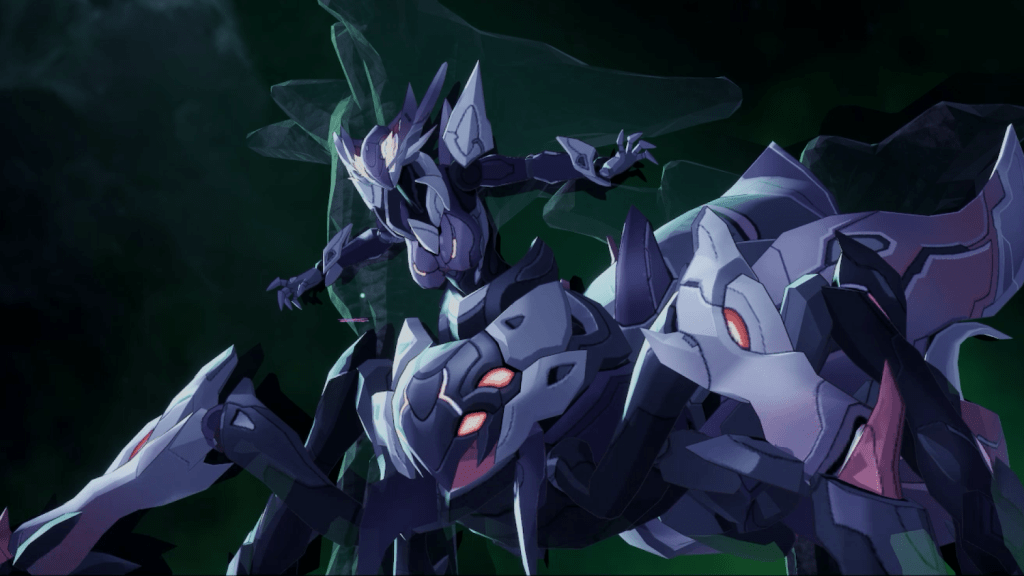
Aesthetically, Star Fire: Eternal Cycle doesn’t always land, but it still delivers a convincingly alien world with a few standout enemy designs. Some environments are more inspired than others, but in terms of confined sci-fi locales it’s suitably austere. Overall, this is an easy one to recommend for both roguelite fans and those curious about what makes these games work. Give it a few runs, unlock some new weapons outside of the starting trio, and you’ll find yourself coming back whenever you get the itch to beat ‘em all up while deftly rolling the dice of progression. 


Platforms: PC (Steam)
Publisher: Indie Herb Games
Developer: Ethereal Fish Studio
Available: Now

Öoo Review: An Explosively Fun, Bite-Size Journey


TAKEAWAYS

  • Öoo is a smart, short and satisfying puzzle-platformer
  • Bomb Caterpillar mechanics make for a unique means of traversal
  • Music and visuals serve as the perfect complement


REVIEW

The unassuming but alluringly-titled Öoo is the latest game from NamaTakahashi, who previously released the excellent puzzle-platformer ElecHead. Those who enjoyed that zippy little adventure will find even more to love in Ooo, which follows a similar structure while introducing an entirely new style of traversal. 

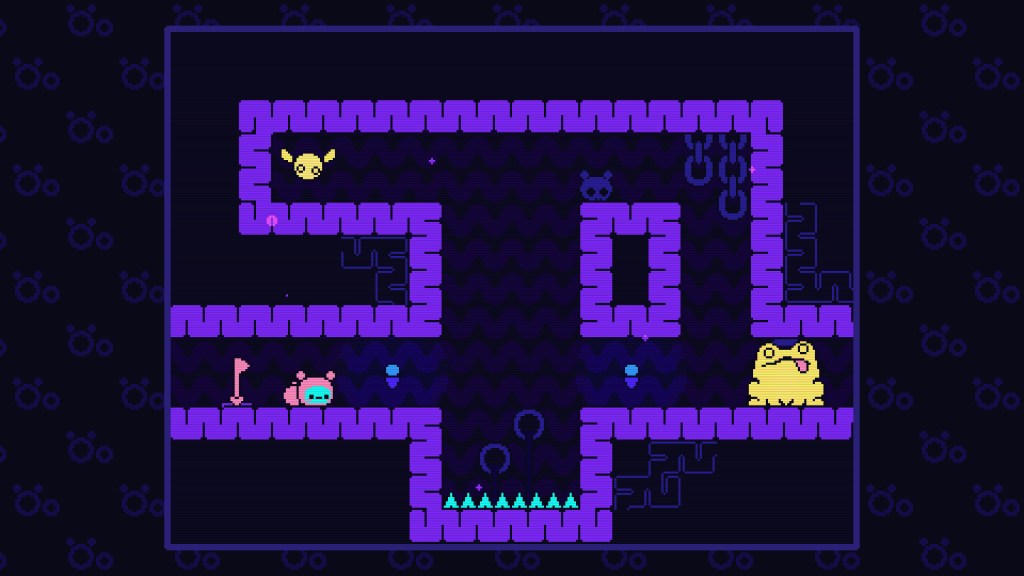
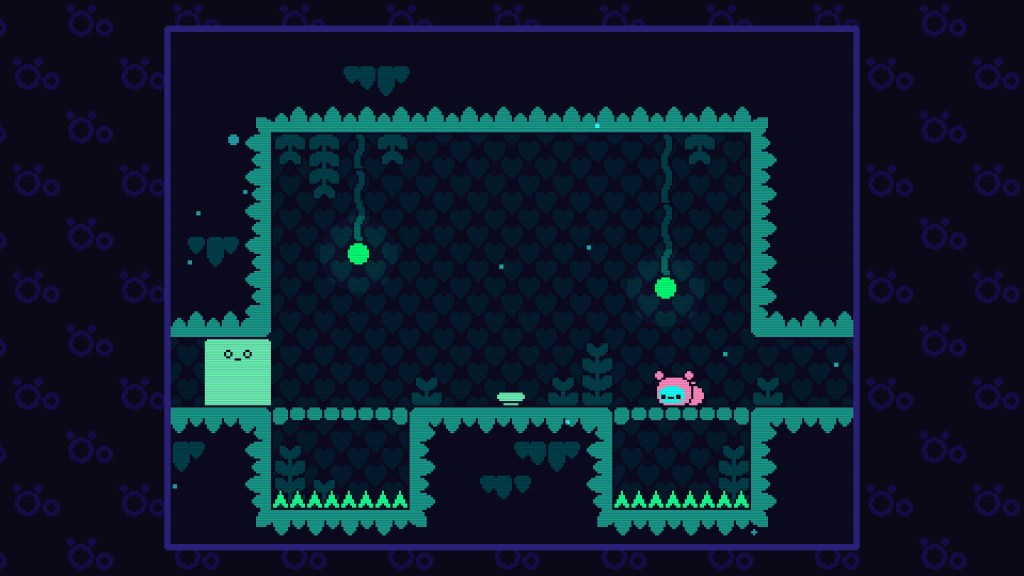
Öoo puts you in control of a Bomb Caterpillar, which is exactly what it sounds like. The cute little critter is made up of a big circular head and, in the beginning, a single segment that doubles as a detachable bomb. Stuck in labyrinthine hallways (that happen to be located inside a giant winged creature that recently swallowed you) with stationary yellow frogs gating off new sections, you’ll have to come up with creative ways to use your explosive boost to explore the world further.

READ: UFO 50 Quick Recs: Ninpek

Like any good puzzle-platformer, these conundrums start off simple enough. You’ll learn to stand atop a bomb to launch yourself upward and reach high ledges, or stand beside a bomb so the blast launches you to the left or right depending on orientation. Things get complicated rather quickly, and another wrinkle is thrown into the mix when you eventually sprout a second bomb segment. 

It’s amazing to see how the puzzles evolve with the addition of just one more bomb. After that key moment the world really opens up, and there are definitely some satisfying head-scratchers along the path to victory. Öoo becomes a game of chain reactions, challenging players with the irresistible task of figuring out how to work both bombs in tandem to get your head where it needs to go next. 

A single highlight among many is the way Öoo teaches players and rewards lessons learned. You’ll pick up a new technique by necessity only to find a dead end right after. With the power of fast travel, though, you’ll use your ensuing eureka moment to zip back to an earlier section to implement the new technique to open up another area. The magic trick here is that you could have used that move all along; nothing was stopping you outside of the previous lack of contextual inspiration.

One of the recurring obstacles comes in the form of the aforementioned frogs. To get them to move aside you need to feed them a fly, so you’ll then have to acquire a fly nearby and figure out how to get it to the frog. You can’t go past any checkpoints while doing so, because those will slurp up the flies just as quickly as the frogs.

Öoo is one of those puzzlers that just makes you feel smart. The music is consistently catchy, the visuals are cute and minimal and the animations really sell the Bomb Caterpillar’s unique set of moves. At somewhere between two and three hours—three for me, which may speak to puzzles not being my specialty—it’s the perfect length for what it is, too. 

Developers Tsuyomi, NamaTakahashi and tiny cactus studio really nailed a game that absolute deserves the “Metroidbrainia” distinction. Öoo is currently available on Steam for 10 bucks, but if you don’t have it already I wholeheartedly recommend bundling it with ElecHead for just five more. 

Platforms: PC (Steam)
Publisher: NamaTakahashi
Developer: NamaTakahashi, tiny cactus studio, Tsuyomi
Available: Now