Bloodthief Review: Old School Dash ’n Slash Parkour

TAKEAWAYS

  • Action is extremely fast-paced and stylish
  • Throwback visuals end up being more evocative than expected
  • Checkpoint system is all about perfecting individual actions

REVIEW

Can you refer to a game as a “boomer shooter” when there’s little to no shooting involved? I’m not terribly fond of the genre distinction myself, but if it sets the stage for the type of visuals you’ll be treated to in Bloodthief, then so be it. The first-person action game from Blargis is much more than that its throwback, low-poly style, though. It’s a fast-paced, melee-centric parkour action game more in line with something like Ghostrunner, and it’s a thrill to try to top yourself as you get deeper and deeper into its challenging campaign. 

True to its name, Bloodthief has you slashing away with your sword to steal the blood of your enemies, which replenishes a constantly depleting blood indicator on your HUD. When it’s empty, just one hit will kill you, and you won’t be able to pull off all of your sweet parkour moves. The more blood you have, whether attained from enemies or vials littering the environment, the stronger you are and the more capable you’ll be at overcoming the many obstacles along the way.

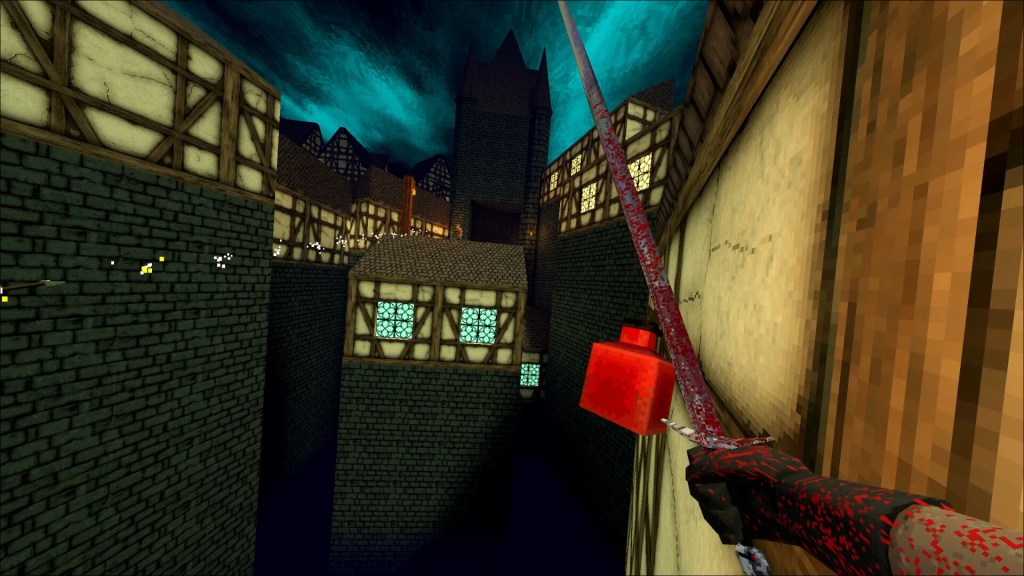
Caught my man wall-runnin’ again

Bloodthief does a decent job of lightly tutorializing the essential tricks throughout the run. Mastering the controls takes time, though, from figuring out the nuances of wall-running to nailing the rhythm of ground-pounding and sliding to build momentum and blaze an even faster trail through each stage. Throw in the ability to spend blood to home in on a specific target and you have everything you need to make short work of the trials to come… if you’re good enough.

Checkpoints are typically situated right before the most notorious sections in each level, so it quickly becomes a game of patience that rewards focus and the willingness to make just one more earnest attempt. “This time,” you say as you inhale deeply, “this time I’ll wall-run at just the right height to pick up those blood vials and air-dash into the black wizard protecting those crossbow archers on the top ledge.” And hey, after that, there’s always a next time.

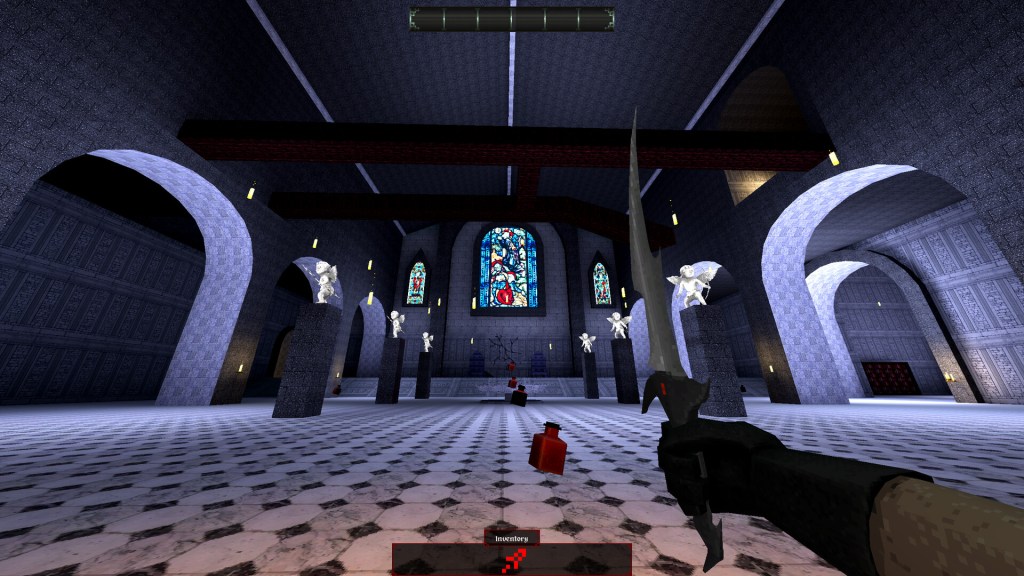
This doesn’t look foreboding at all

READ: Star Fire: Eternal Cycle Review: Roguelite Loot Galore

There’s also a fun parry system in the mix, which gives you a boosted blood reward and makes it much easier to deal with enemies like archers and the spell-casting white wizards. Every now and again you’ll really hit a sweet spot where everything clicks. There’s nothing like going back to a previous stage and playing all the right notes; making short work of something that gave you a major headache mere hours ago.

If it’s not already abundantly clear, Bloodthief is tailor-made for speedrunning. It lives the “gotta go fast” dream in full, and levels can’t just be conquered with style at the hands of an expert, they can be positively obliterated. Even if you never reach those lofty heights, it’s more than worth seeking out videos of those who manage to do so. It might inspire you to play harder and pick up some tricks that will make your medieval life just a little bit easier.

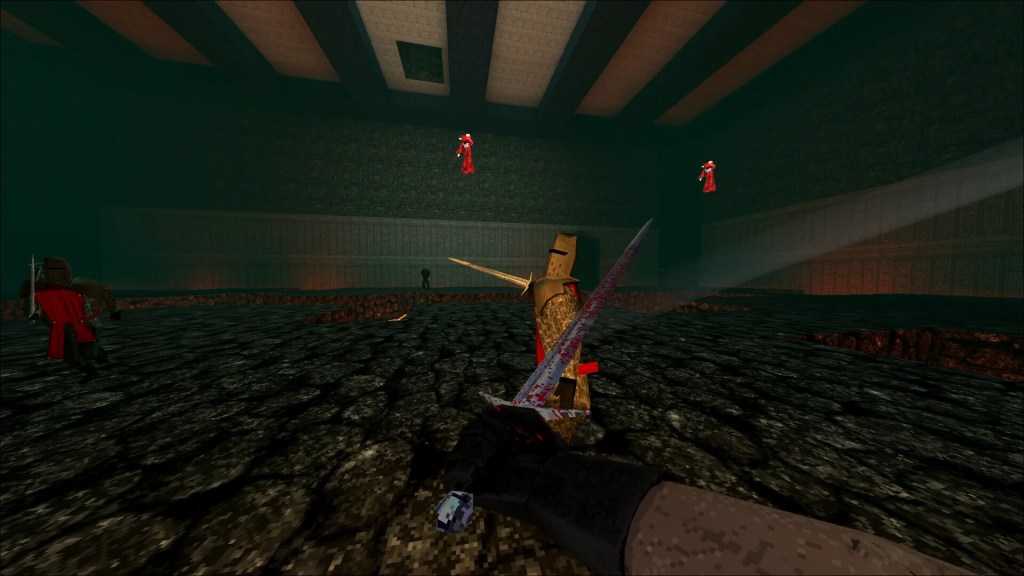
This knave’s about to taste the blade

There are a bunch of extras to consider in Bloodthief, from hidden secrets to speed ranking medals and a leveling system that introduces further rewards. You can even use a special item to race your own ghost through each map. At some points, you might find yourself hitting a wall that requires you to be a certain level before you can continue on to the next set of stages. This can be kind of a drag the first time it happens, but it ended up making me a better player in the long run. When I got first got clocked at level 15 and was told I needed to be level 18 to progress, I immediately started the first stages again and felt like a minor god.

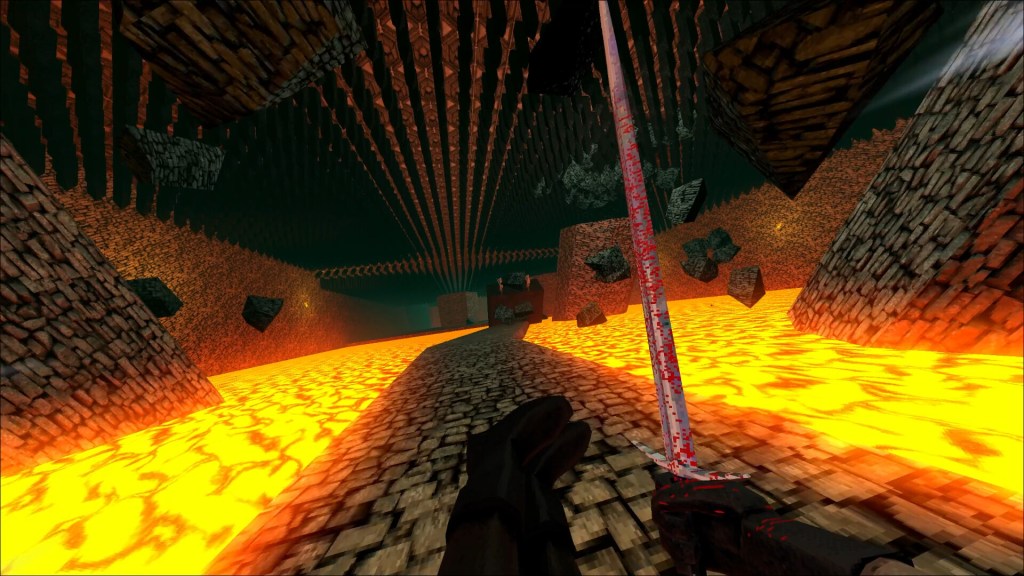
Setbacks like that are what prepared me for the moment I had to slide down an incline, firing explosive crossbow bolts and blowing up walls while a spiked ceiling came crashing down on me, forcing me to vault in the air above a lava pit and careen through another set of spike walls closing in from either side. That breathless run-on description covers a single fifteen-second event that could only happen in this specific game.

Nothing to worry about here

There are a small handful of stages here that I never want to play again; mostly in the form of exhausting enemy arenas that require you to practically stay airborne the entire time to survive. Vaulting those hurdles was still a thrill in the end, however, and that’s my main takeaway from my time with Bloodthief. Blargis has crafted something really special, and it has the potential to develop a fun community around it with the kind of speed tech that’s already, quite frankly, scary as hell. 

Platforms: PC (Steam)
Publisher: Blargis
Developer: Blargis
Available: Now

UFO 50 Quick Recs: Velgress

As much as I would like to keep this to a lean two titles per row, Velgress deftly shattered that endeavor. Just a few titles away from moving on to the second batch of 10, UFO 50 throws this upward-bounding banger at us, introducing one of the most fast-paced and modern platformers of the collection. 

I was tempted to diversify my initial recs and go for something like Bug Hunter or Attactics, but that wouldn’t be true to myself. I appreciate the heck out of those games, but they didn’t grab me in the same way something like Ninpek or Mortol or, in the case of the latest rec, Velgress did.  In fact, when all is said and done, this might just be one of my favorite games in the whole collection.

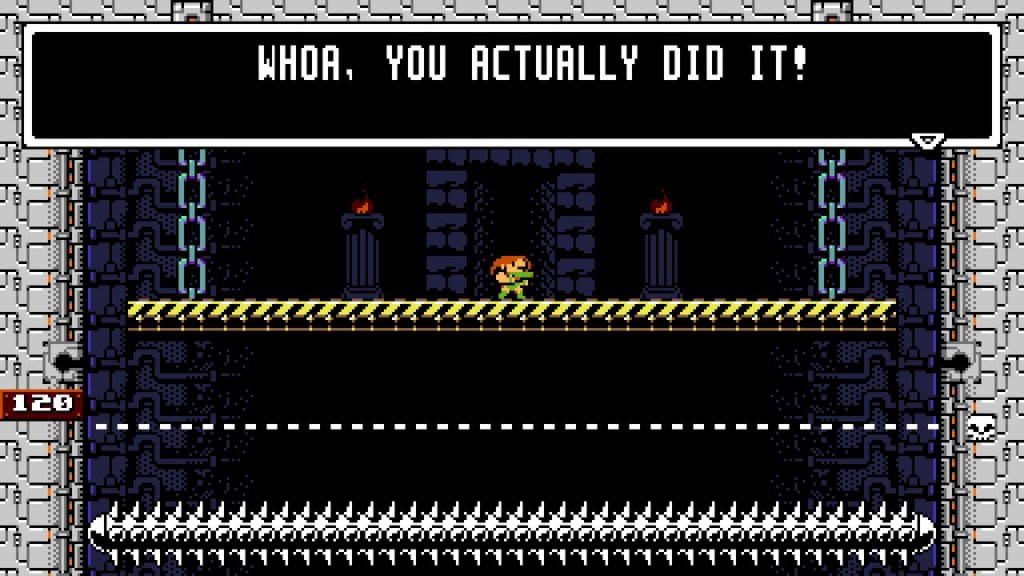
Once you get past the brief story setup, Velgress opens with a simple declaration: It’s time to climb! As the music kicks in with a spirited melody that has major “level one” energy, you immediately feel a sense of urgency kick in. Below you: A screen-spanning steel roller covered in deadly spikes. Above you: Sweet escape? That’s pretty much all you need to know, and even though Velgress is in no way an auto-scroller, its rising threat lends it a familiar gravity.

As the space pirate Alpha, you have incredibly tight control over your jumps, double-jumps and cardinal direction shooting. With the power of sheer determination, you can deftly bounce on bats, avoid crumbling footholds and eventually make it to the top, only to do it all over again in a slightly different way for a few more stages. This is a short game, but it’s long on mastery.

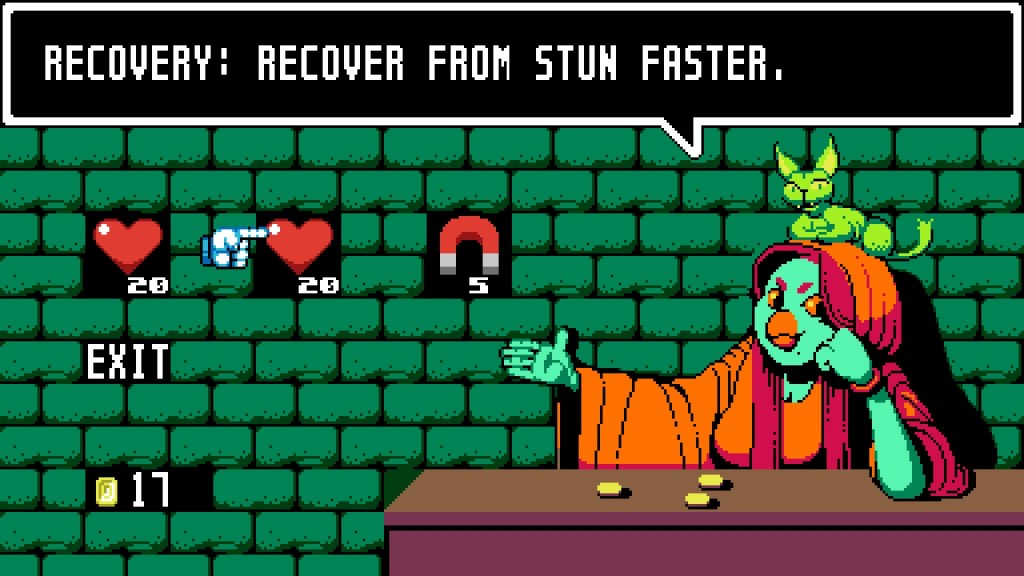
One of the keys to making it through Velgress is actually taking your time, which turns the theming on its head in practice. There’s a nice balance of risk and reward to collecting coins, which you can spend between missions in the randomized shop for a few much-needed upgrades. Some are more useful than others, and your personal style will dictate whether you value lessening your knockback recovery time or slightly slowing down the rate at which platforms crumble under your fleeting foothold. Eventually, you’ll even get a chance to unlock a triple-jump. Never enough jumps when you’re escaping Velgress! 

In addition to the usual level-themed enemy fodder, you have one chance per stage to take out an eagle that can absorb multiple shots. Do so and you’ll get one color-coded key from each. Get all three of these keys and you’ll unlock the fourth and final stage, which culminates in a nerve-wracking boss battle that finds you on the precipice of death the entire time. It’s a thrill ‘em up ending to a game already packed to the gills with close calls. Should you succeed, you’ll find that even the game itself is stupefied at your unlikely victory.

Velgress shoves so much action into such a modest little platformer that it feels like more than the sum of its parts. It’s one of the first games that really breaks kayfabe as far as the fictional ‘80s world of UFO 50 is concerned. It’s hard to imagine an arcade or console game playing this lightning fast and tight in 1984, but the folks at LX Systems were just that far ahead of the curve. 

Keep an eye on the hub page for more recs!

Star Fire: Eternal Cycle Review: Roguelite Loot Galore


TAKEAWAYS

  • The loop is satisfying and expands at a decent pace
  • The early going can be tough (but fair) until you unlock more weapons
  • Enjoyment lives or dies based on how well you mesh with the designs


REVIEW

Fans of almost any genre have a roguelite equivalent they can flock to at this point, and another recently dropped for those who love side-scrolling beat ‘em ups. Star Fire: Eternal Cycle is a roguelite action game that prioritizes fast-paced, room-clearing combat and a gradual progression built upon a pathway littered with character-buffing pickups.

For the most part, Star Fire pulls off everything it’s aiming for with aplomb. Right out of the gate, developer Ethereal Fish Studio promises a streamlined experience that doesn’t get too complicated, and simplicity is definitely the name of the game here. If you’re new to the genre you may initially be overwhelmed with all the pop-ups that appear whenever you grab an item that can take your build down a new path, but it’s all fairly straightforward, leaning into the unpredictability that makes roguelites attractive in the first place.


Combat is built around a succession of light attacks and special moves that have a forgiving rate of recharge that can be further adjusted depending on the buffs you grab along the way. Enemies typically project their attack through visual cues, so you’re never truly caught off guard as long as you pay attention to the on-screen directional indicator. In a crunchier and more methodically-paced game, these hand-to-hand-(to-axe-to-flamethrower-etc) encounters might become a slog. Here, thankfully, movements and attacks are efficient enough to quickly dispatch almost anything.


READ: Öoo Review: An Explosively Fun, Bite-Size Journey


Elite and boss encounters will test your build more than your personal skills. Sure, you could brute force your way through a combination of well-timed attacks and perfect dodges—which, when executed just right, initiate a brief burst of slow-motion action—but bosses will likely always take you multiple attempts. The secret sauce to this and other entries in the genre is, then, to embrace the repeat attempts. When “die and retry” is understood as a key feature, paired with the knowledge that you will eventually succeed thanks to permanent upgrades, you enter the zen phase of the procedural loop.

Beyond the upgrade drops themselves, the other main procedural factor that keeps each run interesting is the branching structure of each stage. Upon exiting a room, you’ll be able to choose what type of area you want to transition to next. Out of the small handful of options you’ll see everything from unique combat challenges to looting opportunities, elite fights and, like a real oasis in the desert, the occasional room set aside solely to replenish health. Thoughtfully choosing your path can spell the difference between success and failure just as much as your build, and one fortunate turn could land you with just the rare offensive drop or defense boost you need to topple the next boss battle. 

Aesthetically, Star Fire: Eternal Cycle doesn’t always land, but it still delivers a convincingly alien world with a few standout enemy designs. Some environments are more inspired than others, but in terms of confined sci-fi locales it’s suitably austere. Overall, this is an easy one to recommend for both roguelite fans and those curious about what makes these games work. Give it a few runs, unlock some new weapons outside of the starting trio, and you’ll find yourself coming back whenever you get the itch to beat ‘em all up while deftly rolling the dice of progression. 


Platforms: PC (Steam)
Publisher: Indie Herb Games
Developer: Ethereal Fish Studio
Available: Now

UFO 50 Quick Recs: Mortol

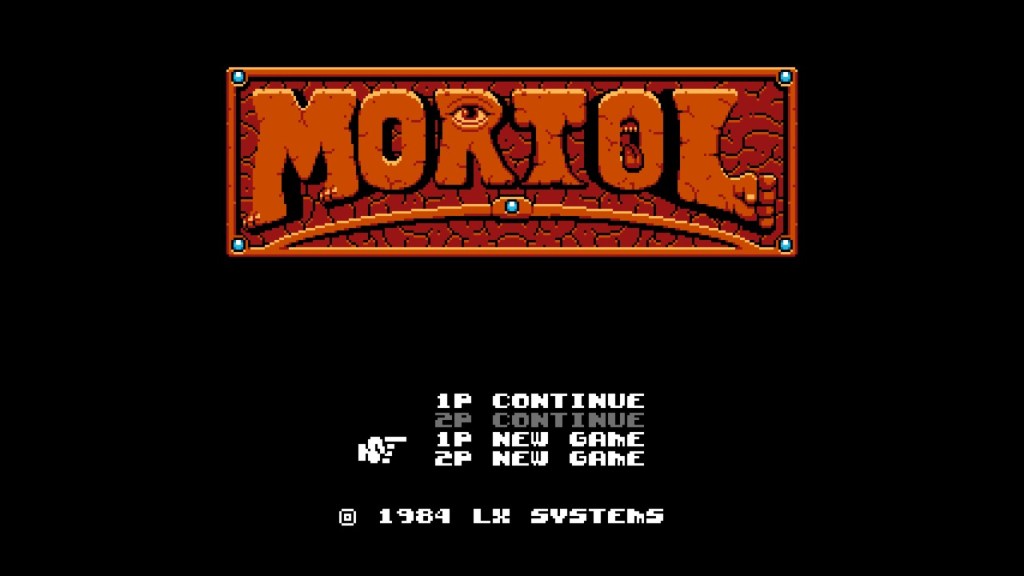
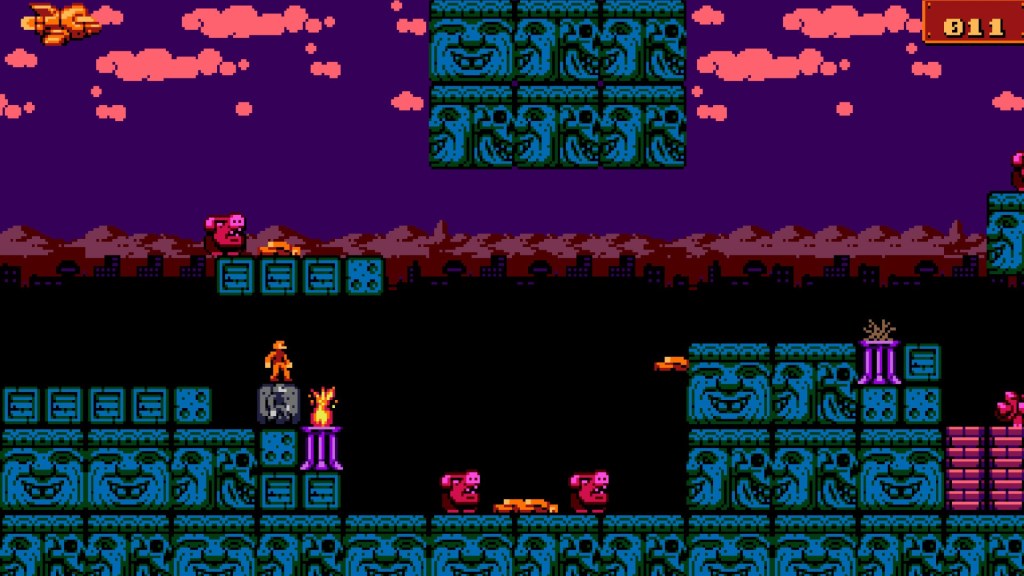
Even after playing all of the games in the collection, it’s still hard to believe Mortol is in the very first row of UFO 50. That makes it just the sixth game that the fictional devs at UFO Soft (née LX Systems) produced, which is quite the achievement! Mortol is the first UFO 50 game that feels ahead of its purported time; wildly creative in its mechanics and leaning toward a more modern “gamefeel” from the very first action.

“How many people will lay down their lives to save Mortolia?,” the description wonders with a tinge of despair. Mortol is a side-scroller that plays like anything Super Mario Bros. adjacent, with a decidedly Dynowarz: Destruction of Spondylus scale to its avatars and enemies. This is UFO 50, though, so naturally at game six we’re already past the simple act of running and jumping. Hurry up, Barbuta! move over, Ninpek! Because these heroes can overcome obstacles with the unbeatable power of suicidal rituals!

In Mortol, you start off with a set number of lives, each representing a new character that parachutes from a ship in the sky. These characters can pull off three key rituals to get past enemies, pits, water and towering cliffs. The Arrow Ritual sends them flying forth like a kamikaze fighter, spearing through enemies and eventually lodging their heads into the side of a wall. At that point they cease to be Mortolians, instead becoming helpful platforms for the next set of suckers soldiers.

The Bomb Ritual is pretty self-explanatory. Hit both up and the action button and your dude goes ka-blooey. The Stone Ritual turns them into a statue that plummets straight down, smashing through enemies and certain obstacles and creating a sturdy block that provides another means of forward progress. All of these rituals can be chained together, giving savvy and skilled players a way to show off some absurdly clever strategies.

As you make your way through 10 stages, you have just as many opportunities to earn lives as you do to lose them. You bank the number of lives you clear a stage with, carrying those soldiers on to the next challenge. Thus, once you improve your strategies, it makes sense to revisit older stages to clear them with more lives in your back pocket. It’s a brilliant system that isn’t overly punishing while offering great rewards and a suicide-bomber safety net to those who put in the work to optimize runs.

From the color palette to the bizarre enemies and another dynamite soundtrack from Eirik Suhrke, Mortol is an easy one to come back to time and time again throughout your UFO 50 odyssey. While I don’t think it will make the Quick Recs lineup, I also can’t help but admire Mortol II for the ways it turns the first game’s concepts on their heads to provide a different kind of playground entirely.

Keep an eye on the hub page for more recs!

Öoo Review: An Explosively Fun, Bite-Size Journey


TAKEAWAYS

  • Öoo is a smart, short and satisfying puzzle-platformer
  • Bomb Caterpillar mechanics make for a unique means of traversal
  • Music and visuals serve as the perfect complement


REVIEW

The unassuming but alluringly-titled Öoo is the latest game from NamaTakahashi, who previously released the excellent puzzle-platformer ElecHead. Those who enjoyed that zippy little adventure will find even more to love in Ooo, which follows a similar structure while introducing an entirely new style of traversal. 

Öoo puts you in control of a Bomb Caterpillar, which is exactly what it sounds like. The cute little critter is made up of a big circular head and, in the beginning, a single segment that doubles as a detachable bomb. Stuck in labyrinthine hallways (that happen to be located inside a giant winged creature that recently swallowed you) with stationary yellow frogs gating off new sections, you’ll have to come up with creative ways to use your explosive boost to explore the world further.

READ: UFO 50 Quick Recs: Ninpek

Like any good puzzle-platformer, these conundrums start off simple enough. You’ll learn to stand atop a bomb to launch yourself upward and reach high ledges, or stand beside a bomb so the blast launches you to the left or right depending on orientation. Things get complicated rather quickly, and another wrinkle is thrown into the mix when you eventually sprout a second bomb segment. 

It’s amazing to see how the puzzles evolve with the addition of just one more bomb. After that key moment the world really opens up, and there are definitely some satisfying head-scratchers along the path to victory. Öoo becomes a game of chain reactions, challenging players with the irresistible task of figuring out how to work both bombs in tandem to get your head where it needs to go next. 

A single highlight among many is the way Öoo teaches players and rewards lessons learned. You’ll pick up a new technique by necessity only to find a dead end right after. With the power of fast travel, though, you’ll use your ensuing eureka moment to zip back to an earlier section to implement the new technique to open up another area. The magic trick here is that you could have used that move all along; nothing was stopping you outside of the previous lack of contextual inspiration.

One of the recurring obstacles comes in the form of the aforementioned frogs. To get them to move aside you need to feed them a fly, so you’ll then have to acquire a fly nearby and figure out how to get it to the frog. You can’t go past any checkpoints while doing so, because those will slurp up the flies just as quickly as the frogs.

Öoo is one of those puzzlers that just makes you feel smart. The music is consistently catchy, the visuals are cute and minimal and the animations really sell the Bomb Caterpillar’s unique set of moves. At somewhere between two and three hours—three for me, which may speak to puzzles not being my specialty—it’s the perfect length for what it is, too. 

Developers Tsuyomi, NamaTakahashi and tiny cactus studio really nailed a game that absolute deserves the “Metroidbrainia” distinction. Öoo is currently available on Steam for 10 bucks, but if you don’t have it already I wholeheartedly recommend bundling it with ElecHead for just five more. 

Platforms: PC (Steam)
Publisher: NamaTakahashi
Developer: NamaTakahashi, tiny cactus studio, Tsuyomi
Available: Now