
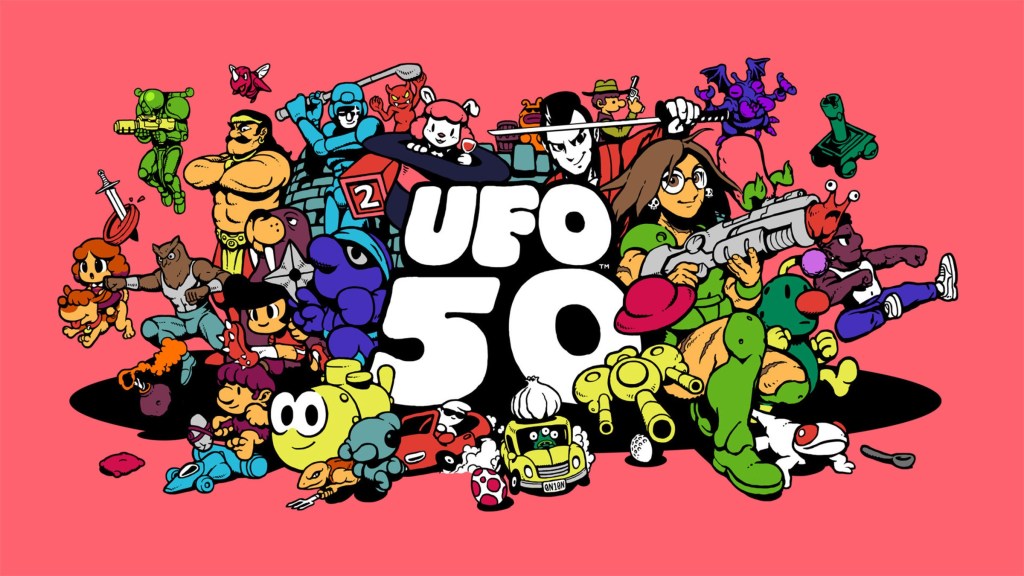
If you dig indie games, you’ve probably at least heard of UFO 50, the 50-games-in-one mega achievement by the folks at Mossmouth. We’ve written about it quite a bit in the few months of this site’s existence alone, but that coverage cowers in the shadow of what the Eggplant: The Secret Lives of Games (now just known as The Secret Lives of Games) podcast did with it.
Over the course of one calendar year, hosts Nick Suttner, Andy Nealan, Zach Gage, Douglas Wilson, Sarah Elmaleh, Laura E. Hall and Rob Dubbin tackled a game a week from the collection with the help of rotating guests. Dubbed A Year of UFO 50, the project managed to dive deep into all 50(+) games, interview Derek Yu and the rest of the development team multiple times, and kickstart a sub-community within its Discord that bred its own unique form of creativity.
It was extremely fun to follow along with, and you can now do so for the first time (or all over again) thanks to a standalone podcast feed. Now that the dust has settled and the hosts have moved on to cover more games, including a year of the work of Michael Brough, we had a chance to sit down with host Nick Suttner to reflect on the achievement.
***
It was around seven or eight years ago when you initially came up with the idea to do a Year of UFO 50, right?
Yeah, pretty much right around when the game was announced, weirdly. I think it was pretty close after it, and I do remember talking to Derek during a PAX, telling him I was gonna make a podcast about Spelunky in the first place, and I think that was maybe around the same time or a year or two before UFO 50 was announced. And yeah, it just seemed like it was perfect, like it was made for that. It’s a year-long podcast, and that’s it. Intro, 50 games, outro, 52 weeks, done; it just seemed too good in that formatting. So I just kind of filed that away, because who knew how long the game would take. Also, every year I would email Derek like, “Hey, don’t forget, give me a heads up on this if you can!”
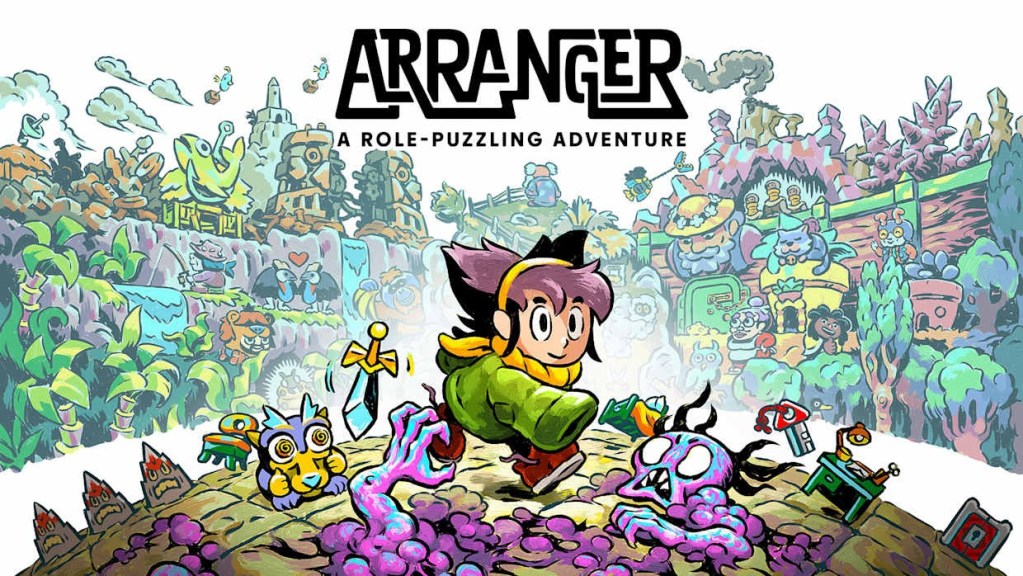
Then, funnily enough, last summer my game Arranger was right next to UFO 50 at Summer Games Fest. Like, right when you walk in the door they were the first two games there. That, I believe, was also where they announced the release date, so then I could just sort of chat with them there, with Derek and John, to kind of confirm that. Also, as much as I wanted to play it, I would not look around the corner of the TV to not spoil too much of the game for myself.
Then it kind of became real. Now we have the date, now we can build this thing around it.
That’s crazy, too, because I guess if you hadn’t started The Spelunky Showlike [the podcast’s initial moniker] yet at the time, or were just about to, you kind of had a whole seven-year trajectory of podcasting after that. I mean, obviously you’ve done many years of podcasting before that, but of this show specifically. When it came time to actually do [A Year of UFO 50], did it kind of seem insurmountable in the beginning? How did you feel about the idea then, and how do you feel now that it’s in the rearview?
I think it just immediately made so much sense and seemed like such a fun structure. At first it was just something I wanted to do, and maybe it would have been my own separate thing, and then over time we sort of built the host pool and it made more sense to propose it as a thing on Eggplant. Doug [Wilson] was super in, because he’s really about playing things as a ritual. He and Zach [Gage] playing Spelunky daily runs early of their own making, too, that was part of what actually influenced the daily challenge that got added to Spelunky early on, so they were part of that whole story.
I think playing things as a ritual, having that weekly sort of cadence, having a week to get into a game, get attached to a game, think about it and then reflect on it and then move on, that’s really nice. And I think especially, the show before that, hopefully it doesn’t seem this way from the outside, but it’s always haphazard scheduling, at the last minute, and we don’t really decide on a game until the week before. It was like, “Oh, we’re a show every two weeks, and we need a game,” but rarely was it programmed ahead of time. It was more what we’re into, and who we can get a hold of, etc. So having a year of our homework set up for us was actually easier, like, “Oh great, here’s an entire year, here’s what we’re playing, here’s a spreadsheet that we’ve locked guests into,” so the actual production flow in a lot of ways was easier than doing it every two weeks with kind of a random game. So the initial idea was very exciting and I was like, “This makes sense, it’s just a matter of who’s in, and planning it when the game has a date announced.”
Looking back at it, I’m really proud of it. I feel like it’s maybe the coolest project I’ve been attached to, so I’m glad we pulled it off. That ended up being the case for a lot of reasons we didn’t really expect, like how integral the guests became to it, and the listeners and the voicemails, which then all became part of the culture of the show, and the story and how we explored it. I think a lot of cool stuff came from it. I’m really happy with it. It’s also nice that now there’s this kind of closure on it in a sense and we have this body of work that, I’m assuming, is one of the deeper dives into a game ever (laughs).
Yeah, I’d say so.
Looking back at it, I’m really proud of it. I feel like it’s maybe the coolest project I’ve been attached to, so I’m glad we pulled it off.
And now I’m excited to do the next thing. We do have the year of Michael Brough, All Systems Brough, but also we’re still doing other things. It’s nice to kind of be able to go back to that, too, and have a little bit of latitude to, like… I’ve been playing a lot of this twin-stick shooter called Sektori that’s really great.
Oh yeah, I saw that was out.
Yeah, and we’ve never covered a twin-stick shooter on the show. I’d love to talk to this dev and I’m really enjoying it, so why not. And I reached out and now we’re recording next week, so we’re still going to have these one-off episodes between, which is nice to be able to go back to and have the freedom to play other games and have other conversations about them.
Yeah, because there’s no time to not UFO 50 if you’re embroiled in a year of UFO 50.
Exactly.
Eggplant, or The SLOG (Secret Lives of Games) as it’s known now…
Thank you, thank you.
It had already well established its Discord, but it really blew up in new ways over the past year. Were you surprised at the way everyone latched onto this one game (with 50 games inside it)?
It was really nice, and I think it helped being sort of parallel to the official UFO 50 Discord and people playing through things over there, and people like glove, who’s a big part of that community, being part of our playthrough, as well. And then of course the regulars that emerged, and a lot of people kind of hopping aboard along the way was really nice. And then having the game-specific forums to discuss and really be able to go in deep on each thing.
I think in the way the idea just made sense and just sort of carved out that ritual and regularity and homework, I think that’s maybe attractive for people, too. Like, “Oh yeah, this is kind of just a nice book club that I can join,” and it’s finite and it’s doable. I imagine it’s even more of a luxury as a listener and not being on it, where if you can play something for 20 minutes and if you don’t like it, you don’t really have to play any more. (laughs) Not that I ever really felt that.
So it was super nice, honestly, it was way bigger than we ever could have anticipated as far as that group playing along. And it just felt like a fundamental part of the project, and I was glad we could bring some of that into the show via all the great listener letters and everything.
It’s funny that you mentioned the luxury of being a listener and kind of being able to drop these games, but I also found it hard because I would play 20 minutes of a game I didn’t particularly care for, and then I’d listen to the episode like, “Ahh, I should’ve played more.” Then I’d see it in a new light, and I felt that way about games that I now think are amazing.
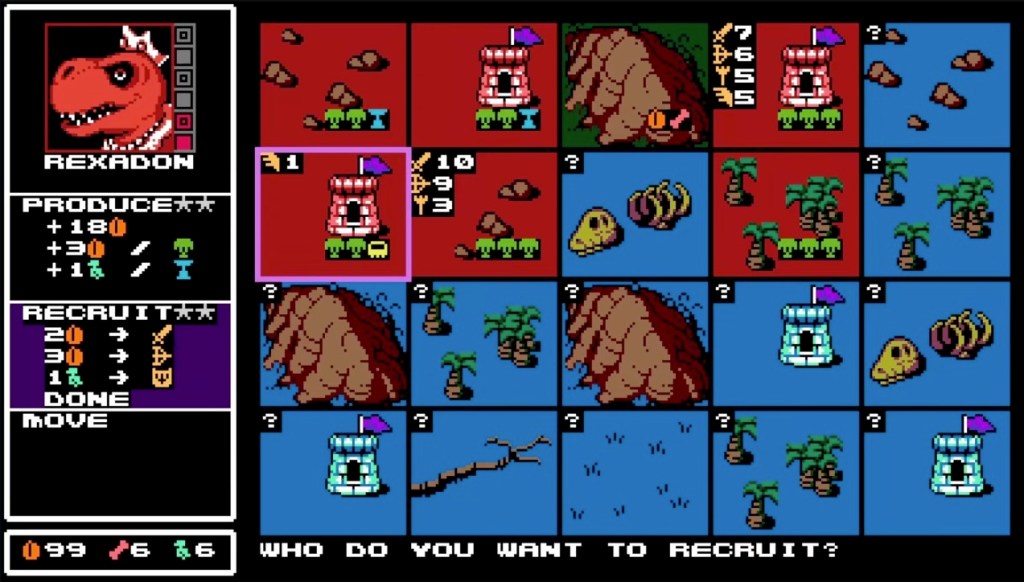
Like the first time I played Avianos, because I’m not really a strategy person at all, I played it and it was kind of esoteric, and just like, the very UFO 50 thing of “just figure it out on the fly.” And then I listened to the episode and I was like, “I really appreciate this game now,” so I went back and thought, “this game is pretty rad actually!”
Well, it’s interesting to have that whole narrative arc of so many of the games, I think even in the same week, of like, “What is this? There’s a lot of friction here… oh, I kind of get it, oh, maybe this is interesting, oh, this is really interesting, oop, it’s done.” It’s this whole journey every week and building that attachment to it, and that was really the nice thing, was pushing through a lot of genres I wouldn’t otherwise get into or give the time of day.
I kind of mentioned this feeling on the show once or twice I think, but there’s a weird reaction I have sometimes when something is instantly really great, where I’m like, “Oh, I don’t need to just devour this.” Like, it’s so good I almost don’t want to, I’ll come back to it. I know I’m gonna love this so I’ll go try something else. So I think in that moment, just getting to keep playing a thing I love was kind of nice, too, and a thing I don’t often let myself indulge in.
That’s how I felt about Mini & Max. I was like, “Oh, this game’s awesome” within the first five minutes. “I love it, I’m clearly going to be playing this for the next year, so let me just dip back out.”
Yeah, yeah, totally.
Between the project and your personal life, you probably didn’t have much time to play anything outside of UFO 50. Even with a different game every week, the visuals, audio and theming are all intertwined in some way, so did you experience any burnout in the process?
Up until we had our editor Dylan [Shumway] join when I went out on paternity leave, basically the end of last year, I edited like 98 percent of the episodes of the whole run. And I really enjoyed that process, even though it does take a long time; it takes longer to edit an episode than record it usually. We used to have a very tight schedule, too, turning it around that same night, or maybe in one day. Again, having that rhythm made it easier, but then having a kid it was like, “Alright, I can’t reasonably do this for a while.”
Thankfully, Dylan’s had the bandwidth to take that on. Thankfully, our Patreon supporters have given us the ability to have an editor and pay someone to do it, and now it just made sense to have Dylan stick around and keep that work. So that’s helped a lot, I’d say, over this past stretch. Sometimes that can catch up, the extra work of the editing, as well. I really enjoy it, polishing a thing we did, but don’t always have the time. Especially in the Year of UFO 50, where things aren’t flexible. We can’t push this out a week because then it kind of falls on top of itself.
I think just kind of getting back into the rhythm, because I went out, I forget how many weeks, but I missed a few games when I was out on leave, and I had to play some of them to catch up.
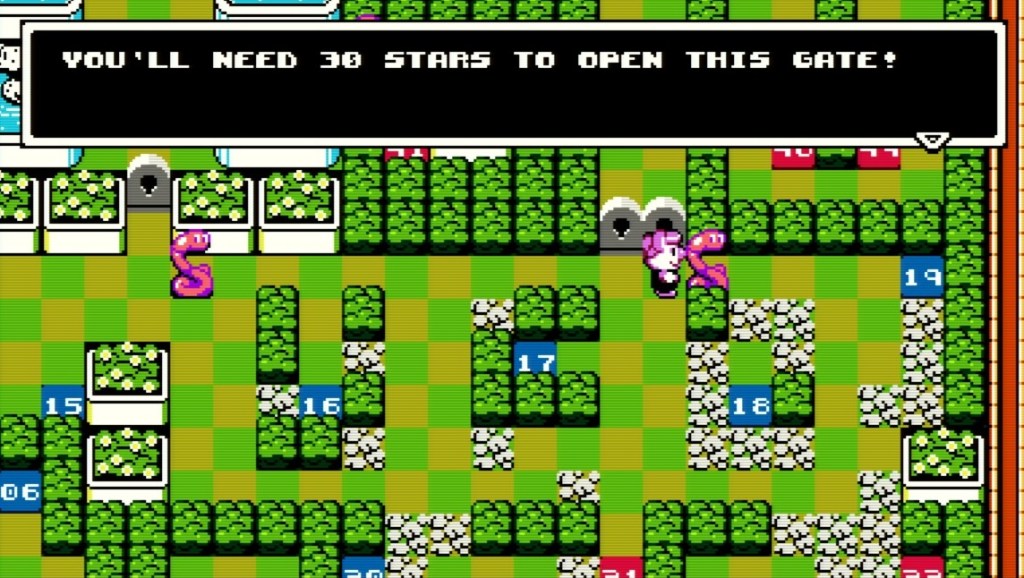
You missed a controversial game [Block Koala], didn’t you?
Yeah, exactly, I think my partner went into labor the day of the recording or something like that (laughs), so I missed that one. Although I kind of wish I had been there, I don’t know, I didn’t hate that one. So I missed that and Golfaria and Camouflage and a few others I think in that stretch, that I then had to go back to and play, sort of, in a slightly different way and reengage and catch up and get back in the rhythm. Once you fall out it feels kind of hard to break back in, so it’s not quite burnout, but it’s like you gotta put some more effort into getting back on track.
I think toward the end, I suppose the final stretch, we were kind of ready for it to be done. I’m trying to put my head back into the space of why that was the case. I think we were excited for the ending and excited to reflect on it all as a body of work, but I think also it was just a crazy year for most of us personally, and it’s like that rhythm, and needing to not take a week off and needing to make it all happen… of course we could [take a week off], but we were kind of strict about it. I think we were ready for that specific part of it to be more flexible. That, partially, is what informed All Systems Brough. It’s one episode a month, which feels a lot more like something you can commit to around your personal life.
Speaking of that, you recently kicked off All Systems Brough, A year of the games of Michael Brough. This one is obviously scaled back from one game a week to one game a month, but was it hard to think of a way to “follow the act” of A Year of UFO 50? It’s very fitting for the SLOG either way, but can you tell us a little about how you landed on Brough?
Michael’s been on our wishlist since literally the beginning. We had a document of people we wanted to talk to even before we put the first episode up. Even when we were just thinking about Spelunky, it was like, were there people we’d like to chat to? I think in part because it felt like it always made sense to cover his stuff as a body of work more than an individual game, and I think because maybe he hasn’t been as prolific in the last few years, we were sort of waiting for that.
Once we started the Into the Depths series, this sort of deep dive series that predated A Year of UFO 50, that always felt like, “Oh yeah, let’s do a thing of Michael’s games.” But if anything that felt maybe too limiting. Like, how do we do four or five games, or four or five episodes? How do we fit that in, and which do we choose? It’s something we wanted to do, we just didn’t get around to it yet, so then, thinking about what would make sense after this, and especially lowering the cadence, I think one game a month, definitely we can find 12 awesome games of Michael’s easily. He’s of course very prolific overall.

And now knowing things like how much the guests brought to it, we can very intentionally program a great guest lineup with it to help back that up and bring a lot to the show and just sort of move this format forward. Then we have people on Discord play along, which thankfully I think a good amount of folks stuck around. So I think it just made sense with that format, and then again to have the freedom to do other shows in between.
We talk about it a bit on the intro episode, but I think Michael is a lot of your favorite designers’ favorite designer, but he’s not a household name. But he’s been very influential, he’s really gone deep on, you know, sort of the genre, or whatever you would call what he’s doing, these grid-based strategy games by and large. And he’s been very welcoming of the idea with us. He’s been very warm and he’s always very nice to connect with over this. I think someone who is very flattered by and supportive of you studying their stuff is also encouraging, versus just doing it with someone who we have no attachment with. And Michael’s on the Discord, chatting with people there, so it’s kind of funny, too.
I’m kind of in the boat where I’m learning along with a lot of people about Michael Brough. I’ve heard him on previous episodes not talking about Brough games; I think he was on Slice and Dice.
Yeah.
So it’s cool in that regard, but also, from what I can gather so far—I’ve only played 868-HACK at this point—but I think one of the most compelling things, going back to UFO 50, is that whole sense of discovery, which seems to play really well into the games of Michael Brough.
Totally, yeah, I think there’s a lot of overlap there, and the feeling of sort of unearthing this artifact that you kind of have to find the edges of and find your way into. Hopefully giving people a little more time between games… even in some ways, now that I’m thinking about it, the discovery of how to play some of his games, because some of them aren’t really playable anymore, and we tried to choose ones that wasn’t the case around. But some are on iOS, some are on PC, some you might not have the right operating system for, so like, in a way it almost extends the feeling of that discovered treasure that was built into the fiction of UFO 50. It also feels like playing this thing that is not quite as easily accessible as everything else, rather than just having this flood of content you usually would on Steam and everywhere else.
It’s like you have to be intentional about what you’re playing and intentional about learning his games and engaging with them and hopefully then doing it with us on the podcast. So I think there’s also a feeling of intentionality there, that also feels pretty different from how a lot of us engage day to day with, like, yeah, I just put on Sektori and zoned out for an hour, you know, before bed or whatever.
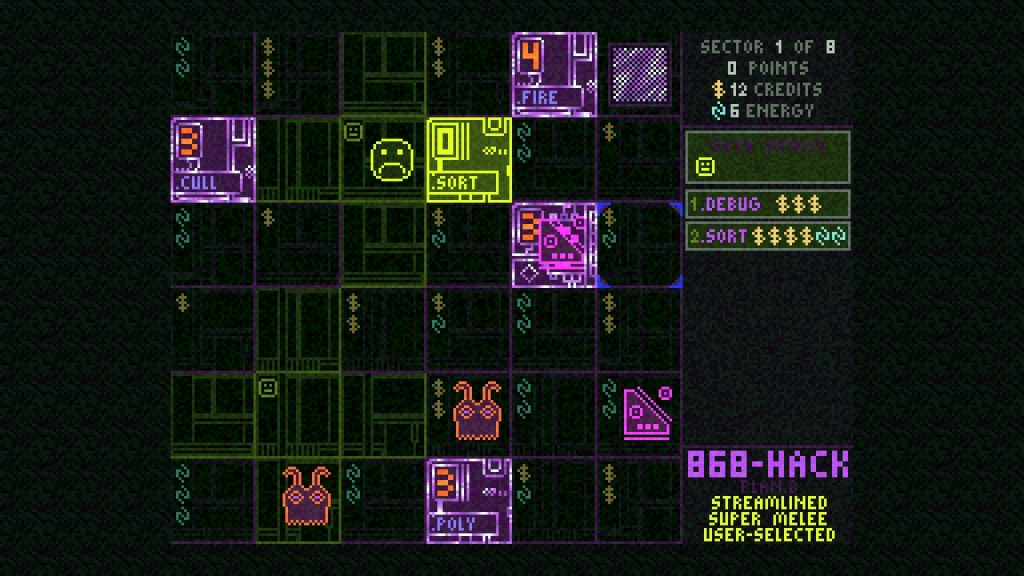
When I started 868-HACK, my first thought was “this is kind of like Bug Hunter if I understood even less.”
(laughs) Totally.
There are a lot of different origin points among the podcast hosts. Given your history, from your journalism days to working at Sony to working at Panic today, I get the feeling your origins lie more with consoles. What was your familiarity level with Brough games before starting?
My history is weird, I kind of grew up as a Mac kid in the ‘90s.
That was me, too.
Yeah, so I was like the weirdo at the time, for having a Mac even. I got a Mac for my Bar Mitzvah. So playing Bungie’s early games, like Myth and Marathon and stuff, I was a big Mac gamer, and I was kind of devastated when Microsoft acquired Bungie at the time, ‘cause I was excited for Halo as like a third-person 3D open-world thing (laughs).
My parents also didn’t let me have TV systems until PlayStation, so I think around 1995 is when I got a PS1. I mean, I played Super Nintendo and stuff at friends’ houses for sure, but I think that was sort of my seminal cultural introduction to games, was PlayStation and PlayStation culture, which is why it meant a lot when I went on to work there later, I think.
So that’s my background, and coming into Brough, I’d say I had played a good few of his games. I have a Brough folder on my phone next to, like, the Gage folder, the Stollenmayer folder and some others. But I think maybe the mobile format, and my relationship with it has changed a lot over the years… maybe nowadays it’s playing something for shorter sessions if I do at all, or taking my turn in an asynchronous board game, but it wasn’t poring over something and spending a while thinking about it. I’ve done that since a little bit, like replaying Into the Breach on iPad or something like that, where it’s a great format.
So I think I’m really ready to reengage with it now and spend more time with these games. Before, I’d probably spend a couple hours with each of them and be like, “This is super interesting and I want to engage more,” and sort of fall off of it for whatever reason and get caught up in something else with maybe a little less friction. I feel like I’m coming into it mostly fresh, even though I’ve spent a good few hours with the games overall, and that’s exciting to me. And to have different levels of experience between us on the show, too, I think that makes for a good dynamic.
It does kind of have that feeling of dusting off UFO 50 carts.
Yeah, yeah, really.
Now that it’s all over and you’re back to a more normal-ish podcast cadence, you mentioned Sektori, but what non-UFO 50 game are you most excited to dive into? Anything you’ve been meaning to catch up on that you couldn’t get to while embroiled in UFO?
There were even just some things like Clair Obscur that I was like, not totally my thing on paper, but I’m just really curious what everyone loves about it. I played a bunch of that and I was like, “Oh yeah, it is a great game.” I’m kind of in the final act and it feels like it’s a little long in the tooth, but overall it’s great. I don’t know that it’s the sort of thing I want to cover on the show, but it’s been nice to just have time to play that.
I think it’s personally just nice to have time, like there’s a local developer here in Chicago named Brady [Soglin] who made a game called Tall Trails that came out a couple months ago that’s like a really charming kind of semi-open world fun physics-y platformer kind of thing with this little golem jumping around. I was gonna go have coffee with Brady a few weeks ago and I was like, “Oh, let me sit and play through that game over the course of a few nights,” which I did, so it was nice to have that kind of freedom.
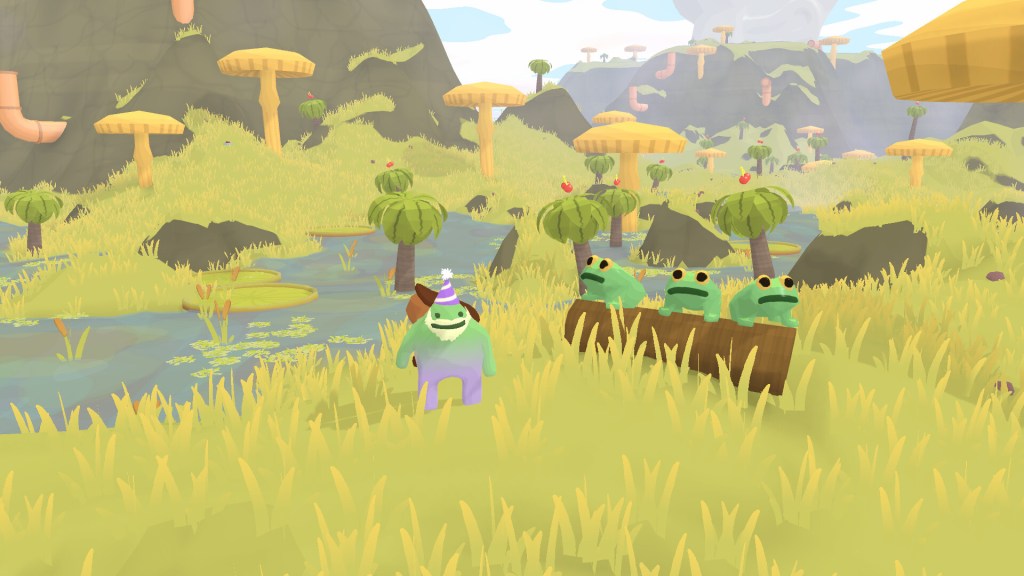
For the show, I think we’re keen to talk to the Baby Steps team. A bunch of us have been playing that, and Bennett [Foddy]’s a close friend of the show and has been on a bunch, so we still want to do that. I don’t know exactly when; it also feels some things like that are a little perennial, too, where it kind of doesn’t matter when we cover it, it’ll still be a good conversation. Again, this is the thing where we don’t set up a lot ahead of time…
That’s a luxury. Now if you’re interested in something you can be like, okay, I actually want to talk to the people who made this.
Yeah, and it’s nice to have both. It’s nice to have our monthly homework and the flexibility to do stuff in between. And I think also having folks like Laura [E. Hall] on the show, who comes more from the immersive escape room ARG side, and is often engaging in interesting things in that space, I think it’s nice that they can bring that element to the show, too. So we end up also playing or talking about and covering things outside of traditional video games.
It’s nice to think also that we’re at this point where all the hosts have our different latitude to bring different interests to the show and decide who wants to be on that episode.
Big thanks to Nick for talking to us, and be sure to check out The Secret Lives of Games wherever you listen to podcasts!
 subhumanzoids