For those who haven’t met her already, I’d like to introduce you to Briana Lawrence. She’s an author, a cosplayer, a panelist and more, including, as her website states, a “professional puppy petter.” She’s also my co-worker, which makes her even cooler. Thankfully, this is my blog and I can do what I want, which involves reading Briana’s books and asking her questions about them!
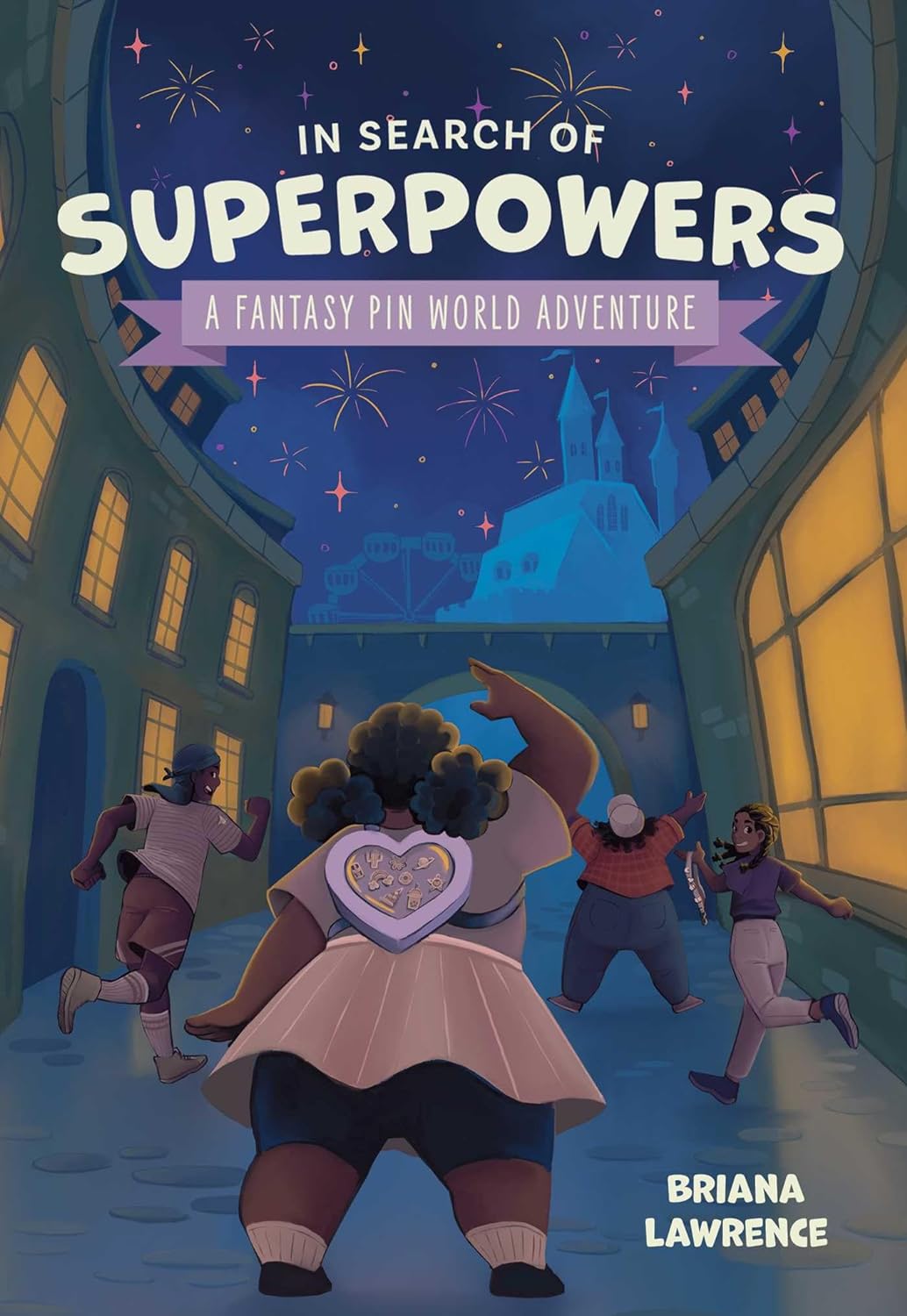
Back in January, Andrews McMeel Publishing released the first volume of Briana’s latest project, In Search of Superpowers: A Fantasy Pin World Adventure. Flash forward to today, though, and it’s already no longer her latest work! June 11, 2024 marks the launch of The Essential Manga Guide: 50 Series Every Manga Fan Should Know, written by, you guessed it, Briana Lawrence. It’d be weird if someone else wrote it and I was still talking about it, but I digress.
HOW does she do it? WHY does she do it? WHEN does she find the time? All these questions and more were burning a hole in my brain, so I used my own magic power called “I can message Briana at literally any time” and got to the bottom of ’em.
***
Can you tell us about how In Search of Superpowers came to be? When did the first spark of the idea come about, and was it always going to be a novel?
So the publisher (Andrews McMeel Publishing) actually approached me about the idea! They had the idea about the kids with the superpowered enamel pins, but I had the chance to flesh out the kids and develop the overall plot, which is great because it meant I could make them as diverse (and nerdy) as I wanted. I also had the idea of their powers being a bit more subtle, like, things you might not notice right away (like Angela’s ability to copy what she sees, or Skylar keeping things more organized) and things that would probably come in handy in everyday life… but could also be easily mishandled.
Also, since it’s enamel pins I thought, “Well… they could swap the pins back and forth, couldn’t they?” They could trade pins and play around with their abilities, like how Sophie doesn’t really like her power and trades with Skylar.
What is your process like? Give us a look at a day in Briana Lawrence’s writing life!
Hahaha, I wish I could say I was one of those “set schedule” writers. I TRY to be, but I feel like when I actually have a free day to write my brain gets distracted with other things, or I write for an hour or two then stop. I usually end up writing after work, or during lunch, or something like that. Early mornings before I clock in are GREAT for me.
Sometimes, if the muses are nice to me, I do it over the weekend. It’s an interesting balance since my day job is also writing related, so I go between that and book writing.
Your characters are all richly defined but in a breezy, easy to digest way. How long have they been living in your head, and do you tend to flesh them out fully before diving into the story or is it the other way around?
Thank you! I love that my characters feel like that to people. When the publisher told me about the idea they had a small amount of details about the characters, but I added a lot of my own ideas to them (which they were very happy about). One example is Angela and her stepmom, Latrice. I really, REALLY wanted to tell a story where the stepmom isn’t terrible and really is trying her best. That’s how my stepmom was, who I recently reconnected with when my dad passed away. They’d been divorced since I was, like, 14, but she was always there for me while they were together and she showed up to be there for me when he passed away, so I was like, “I have to have a good stepmom,” lol!
I always flesh out the characters first before getting into the story. I make a Google Doc and just write out ideas and descriptions for them. With Fantasy Pin World I also figured out their powers and how they’d want to use them. I also figured out fun stuff they were into as well so the story wasn’t just about their powers, that’s why Travis is a gamer and Angela really loves Princess P, who is basically a magical girl. I feel like I have to have that nerdy touch somewhere as someone who loves anime and video games.
Congrats on getting this to the finish line and in hands physically! This obviously isn’t your first trip to the bookstores—you appear to be quite prolific!—but what was the path from page to publisher? (AKA how did you do this?)
This actually is my first book with a publisher! I’ve been self-publishing this entire time! I’ve had short stories or essays in things that are in bookstores, but this is the first book I’ve had that’s physically IN bookstores! This has always been the goal (I’ve had big writing dreams since I was nine, I know this because my mom still has all my old stories!) but it’s still hard to grasp onto the fact that it’s happening, you know?
The path has been quite the adventure. I’ve always been writing somehow, whether it’s fanfiction or doing a bunch of freelance writing gigs. I’d travel to conventions with my wife and we’d sell our self-published books. The publisher connection came way later in life.
There’s been some major setbacks. I feel like we can all relate to that, especially after 2020. I had a lot of plans that completely fell through, but I really can’t imagine myself doing anything else but writing, so I just… kept trying. I’ve learned that you end up making connections in the most unexpected ways. Me writing a bunch of deep dives on my feelings with anime and manga got noticed, for example, and me constantly trying to get my self-published stuff out there. Now I’m working with a publisher for Fantasy Pin World, a different publisher for a manga essay book (The Essential Manga Guide), I partnered with another author for her Gamer Girl series, and one day I am going to have that magical girl animated series just so I can have an anime-style opening of them running through the grass or something.
So I guess the path from page to publisher has been “rocky, but always trying to catch up to that dream I had as a kid.”
Do you have a preference in your writing style? As in your go-to genre or medium (comic, prose, etc.)?
Go-to genre tends to be young adult fiction, I feel, especially if I get to have adult characters also learning and growing (like Latrice in Fantasy Pin World). I tend to write prose, but I’d love to do comics or graphic novels someday, I think that’d be fun.

You are busy. That’s just a fact. You also have a book on manga, for Pete’s sake! Can you tell us a little about that and how it came to be?
That’s where all those deep dives come in! It may have been my Kiki’s Burnout piece I wrote (I watched the movie way late in life) but I got an email asking if I’d be interested in writing essays for an anime guide. I was like “sure, I do that all the time anyway” since I was at The Mary Sue at the time. Later, the publisher (Running Press) asked if I’d like to write an entire book about manga.
I love anime. That’s just the truth. But with manga I knew I’d have a LOT more options (especially with LGBTQIA+ content), especially since I got to pick the titles, which was a blessing AND a curse because as I was writing I’d find another manga I wanted to talk about, but alas, the book stops at 50!
I gave myself some limits, like I told myself I could only pick ONE work per creator, for example, and I really wanted to highlight a range of genres. I really wanted to show that manga is full of different genres and isn’t just one kind of story. Even if manga is more popular than ever, there are so many people who assume it’s just one thing (usually shonen) and not a medium that’s made up of a variety of stories. We got horror with Junji Ito, we got rom-coms with Kaguya-sama: Love is War, we got autobiographies like The Bride Was a Boy that simultaneously educates readers about the trans community; there’s something for everyone!
I also wanted to have some emotional beats, too, some deeper looks at why so many of us love manga so much, like writing about Bleach and knowing it’s held up as shonen royalty… but talking about how it’s what I needed because Orihime lost her older brother at a young age and I did, too. Or how I went off to college and discovered Naruto at the perfect time in my life. I also was honest about it, like I wrote about Berserk and was like “I didn’t get why so many people wanted something this dark, then my friend started reading it in 2020 and encouraged me to start, too, and I got it.”
Manga just… does that. You can get a deep look at humanity in a story where a dude has a chainsaw for a head, but you can also get validation for being a nerdy woman in something like Wotakoi. You can get stories from gay activists like in Until I Meet My Husband while feeling really good about getting the house clean in Way of the Househusband. I wanted to capture that with this book. I really hope I did it justice!
Finally, let’s pass on some recs. What inspires you, and what are you reading/watching right now?
I’m not purposely making this all anime answers but…
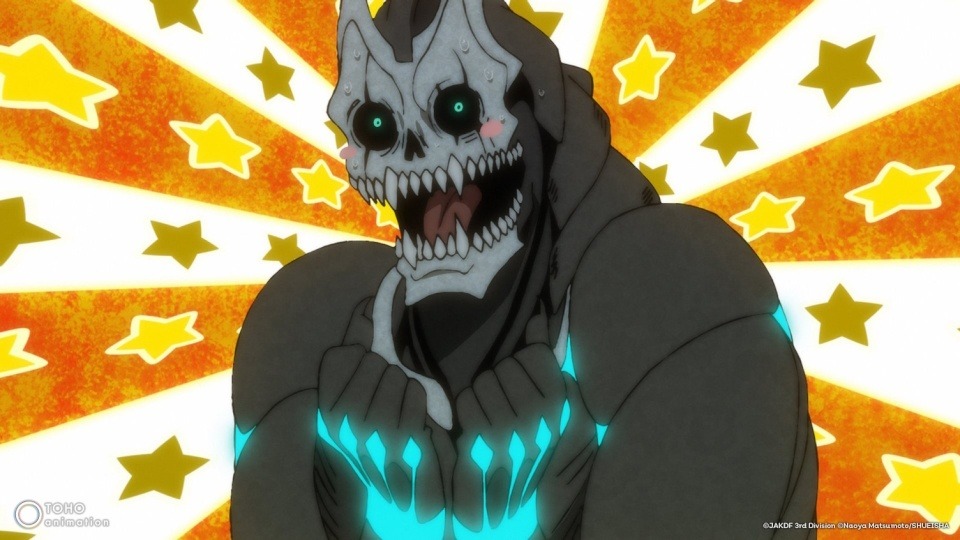
- Kaiju No. 8
- Black Butler
- WIND BREAKER
- Tadaima, Okaeri
- My Hero Academia
- Killing Eve (hahaha plot twist)
Also trying really REALLY hard not to buy a Steam Deck for Hades 2.
As for inspiration, I think everyone around me inspires me. My wife and my mom are my biggest cheerleaders, and they’ve always inspired me to go for what I want. I went through a period for a while where I tried to not be a writer because I kept being told that it wasn’t a “real job.” But these two knew what was in my heart and supported it. I also have a really close group of friends who are artists, so they understand the creative drive and the desire to do this. It’s really nice, we cheer for each other and inspire each other all the time.
Oh, and I work around a bunch of encouraging nerds 😉





 subhumanzoids