strange talent

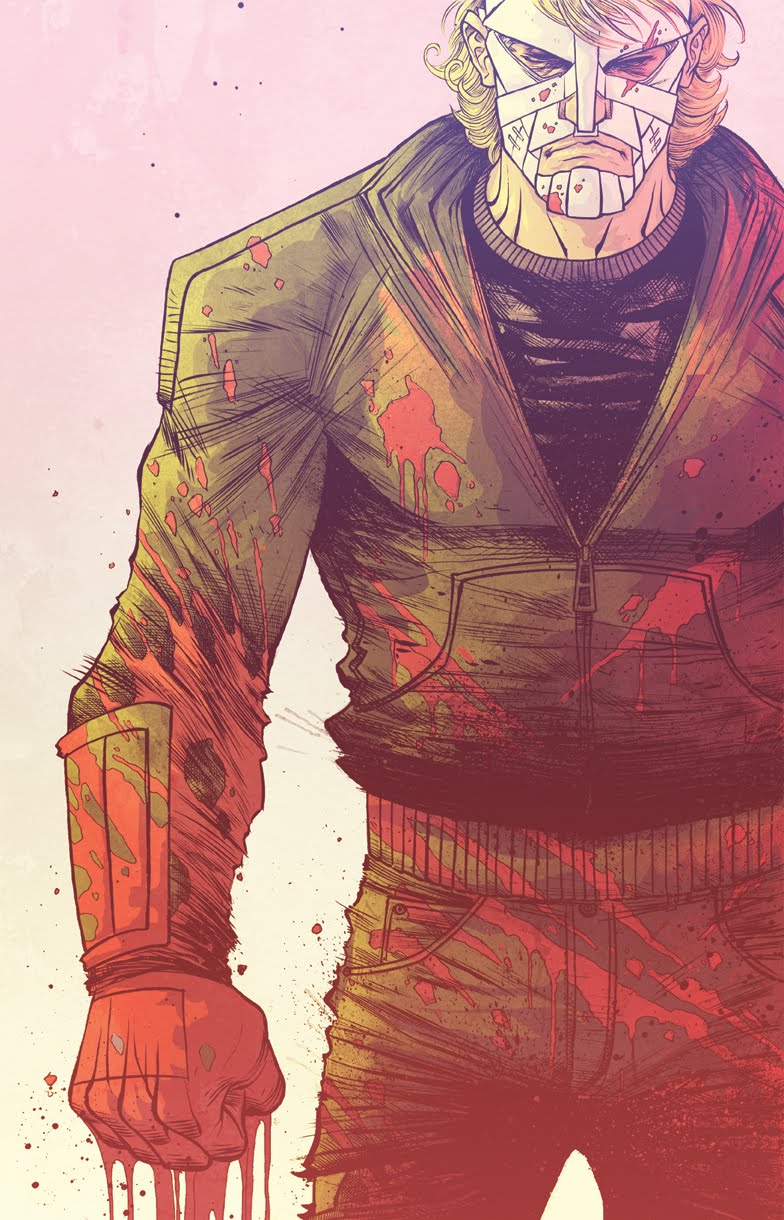
I recently read through The Strange Talent of Luther Strode, a pretty fun six-issue series that basically boils down to a scrawny wimp suddenly blessed with absurd strength and what he chooses to do with said strength. Like a lot of vigilante stories, Luther quickly finds himself in situations where he can prevent crime through violence and impressively athletic feats. From there it spirals into a hyperviolent showcase barreling toward a final showdown with someone whose power exceeds even the quick-learning Luther’s.
luther_color_blog

There aren’t really any spoilers there or anything. It’s a straight forward story, and as much as it recalls other kid-turned-hero stories like Kick-Ass, it also kind of reminded me of a shonen manga, structurally speaking. It’s just too bad Luther Strode was ultimately held back by the understandably cautious borders of a six-issue run.

Actually, to keep things kind of current, it reminded me of this really cool Shonen Jump series Takama-ga-hara, which unfortunately didn’t prove popular enough to last  more than a handful of chapters. It was especially disappointing because Viz Media ran it in their digital magazine, known until recently as Shonen Jump Alpha, so even in the west we were treated to a story that was just getting started before being prematurely cut from the lineup.

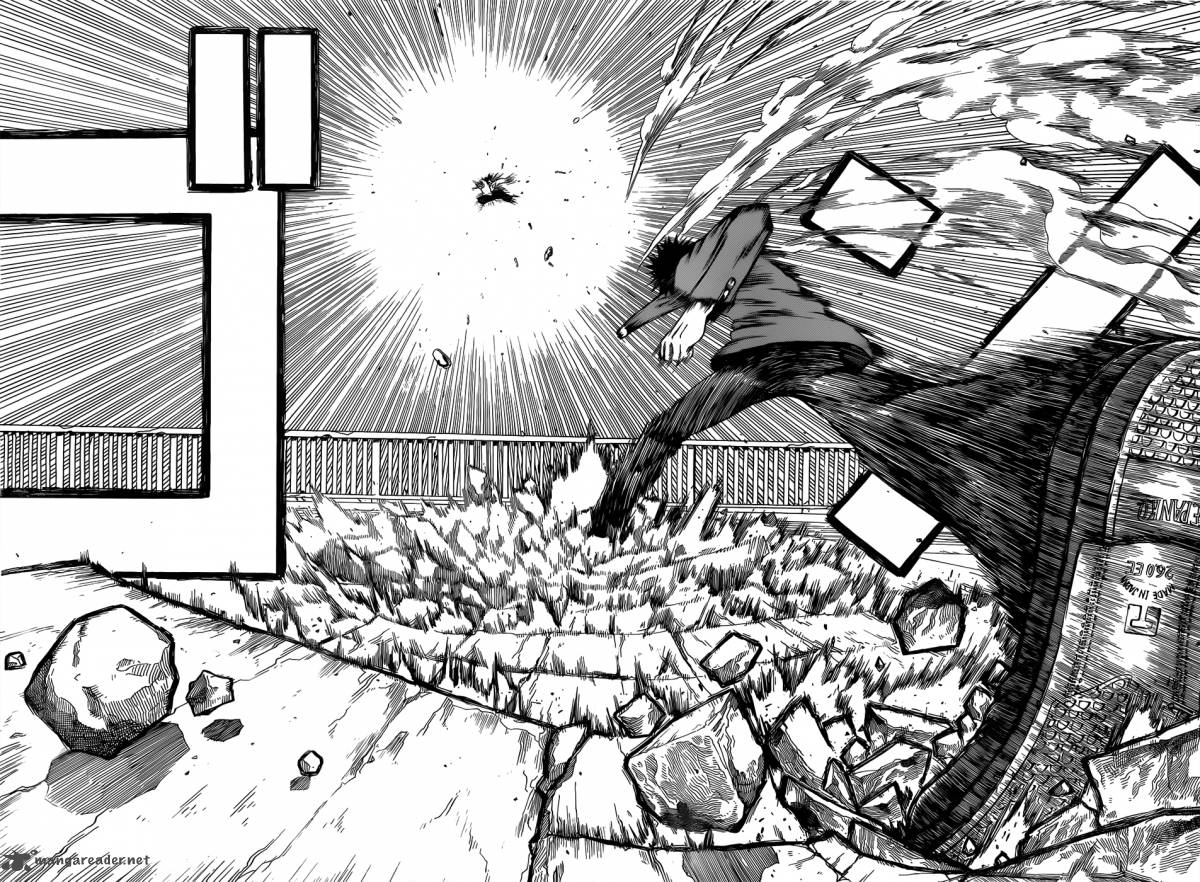
To boil it down, Takama-ga-hara  is about a dude who unlocks his latent potential, despite only wanting to sit around and work on manga. He resists fighting, but once people realize he can essentially knock folks into the stratosphere with a single punch, he’s thrown into a world where bizarre powers collide on a regular basis. It sounds like pretty standard shonen fare, but it’s the execution that made it special, along with creator Juuzou Kawai’s stated goal to “draw battles between those who have awakened to the powers of gods in a fresh way that’s never been seen before.”
takamagahara-3439131

In many ways, the fact that Kawai had to scramble to resolve what would have otherwise been a long-running saga closely mirrors how I felt about Luther Strode.

It’s really entertaining. The art is great. But when it ends there’s a distinct feeling that we’re essentially missing the bulk of the story’s potential. If a character gets a really cool car that fires down the highway at a concrete-blazing clip, the audience would probably prefer some time to enjoy seeing it in action before it inevitably explodes in spectacular fashion. Were Luther Strode at least 12 or so issues it would have had a much more satisfying build to its bone-crunching climax. It’s kind of like leaving the movie theater for most of the second act and being told you “didn’t miss much.”
The-Legend-of-Luther-Strode1

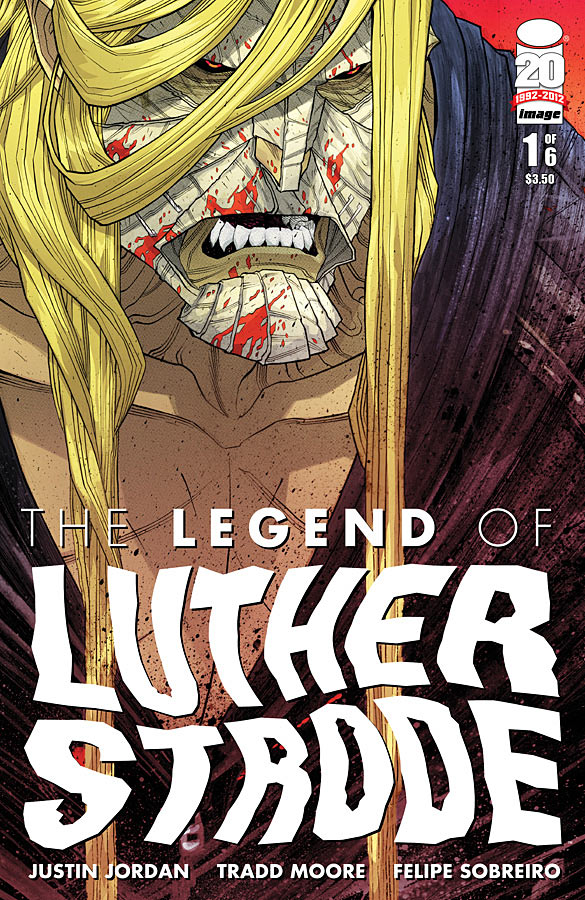
Maybe that’s why I’m not too bothered by the direction the follow-up series, The Legend of Luther Strode, is taking so far. It plays more on the superpowered vigilante as slasher angle, and, well, it’s really just more hyperviolent action. The point is, it’s disappointing when a story is limited because of risk, or because it’s not a tremendous success right out the gate. While I’ll totally buy the fact that the six-issue arc was all they had in mind for The Strange Talent of Luther Strode, I can’t help but wonder what could have been if it had more room to breathe. 

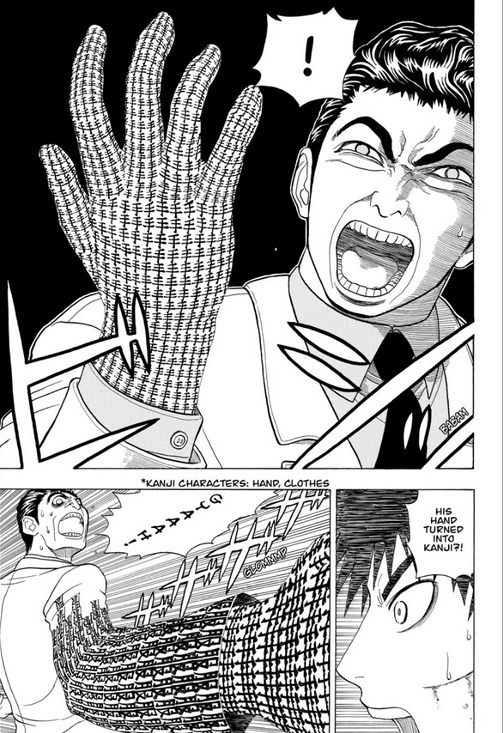
And I really don’t want to think about Takama-ga-hara any more. That series was rad! It had a guy who turned people into kanji!
takama1

takama2

And splash pages like this!

takama

priceless relics

Being home means there’s plenty of time to dig through crap I’ve had sitting around this house since I first emerged from its underbelly circa three decades ago. This could just as easily be called an Instagram Roundup, but I understand not everyone is bold enough to follow every single dumb thing I’m a member of.

Here are some goodies I’ve unearthed while home for the holidays. I’ll try to get more in before I vamoose to MAGFest on Thursday.

robocop2

I would like to read this to you all in person, from beginning to end. For now, here are the opening two paragraphs:

He was a cop.
A good cop.

simpsons

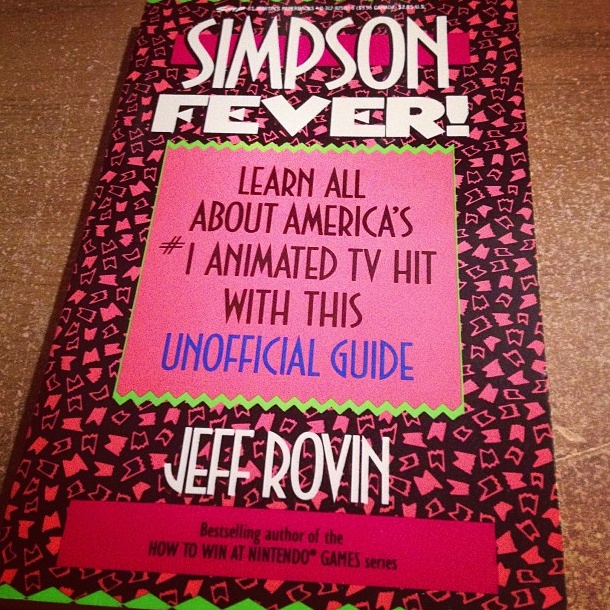
Jeff Rovin was the expert on everything back in the day, including but obviously not limited to The Simpsons. Unfortunately for Rovin, his guide would forever remain unofficial, thus offering children like myself an entire book on The Simpsons with nary a single image of the characters.

winat

This is the kind of stuff Rovin was really good for. If you had any of his How to Win at Nintendo Games books, you no doubt won at Nintendo games. You prob both owned them and owned them, if you catch my dual meaning.

sf

Diehard Gamefan magazine was rad. It was also the source of much unnecessary hype and overspending amongst me and select peers. Above is one of many results: Shining Force III on Sega Saturn. Yes, I have a Saturn, and sure I could play imports. But can I read enough Japanese to play a strategy RPG? Uh, no, dude.

gb

One of the best parts about being back home is going to sleep watching TV. I don’t have cable in my room in my apartment. Except wait, the cable no longer works in my room at home either, so it’s up to my trusty ‘n crusty VCR to play klassik kassettes like the one pictured above.

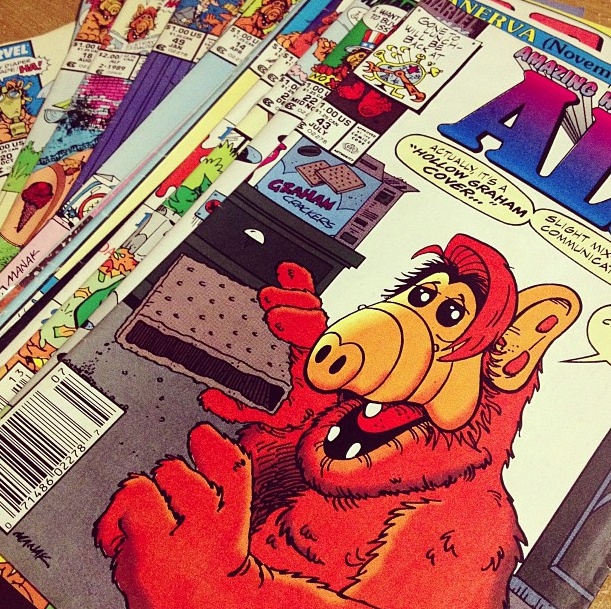
alf2

Whoa! Or should I say, “HA!” The only person who could possibly appreciate the above embarrassment of riches more than me would have to be…

alf

HA!

screenshot_3826And so I ended 2012 by giving birth to Baby New Year. Good night.

an unexpected something

While growing up I had a bizarre fondness for those old BBC productions of C.S. Lewis’s Narnia novels. They’re awful. The production value is abysmal. The kid actors are just the worst. Lucy has this buck-toothed face that even the most mild-mannered of folks couldn’t resist slappin’ around. Nevertheless, I watched them again and again. I even revisited them on occasion over the years. There’s something warm about them, though most of it has to do with nostalgia.

In related news, I saw The Hobbit: An Unexpected Journey in 48fps 3D yesterday.

hobbitfilm

I’m absolutely not having a laugh when I say my favorite thing about The Hobbit was the fact that it looked like a BBC TV mini-series with a billion dollar budget. Everything is incredibly crisp, but also unavoidably raw. The high frame rate causes inelegant makeup and conspicuous beards to appear even more so. Sets are just that, as if you’re standing on them before an audience along with the rest of the cast and crew. On the opposite end of the spectrum, wide landscape shots are mind-blowing. Most of the effects come off as either hyper-real or blatantly computer-generated, though it ends up working more often than not. Gollum in particular looks terrific and Andy Serkis should get whatever award is considered the most legitimate for what he did to bring him to life.

It looks unbelievably surreal, it highlights glaring flaws, it’s both maddening and eye-opening, and I loved every minute of it.

I should point out that I generally hate the whole high frame-rate thing. You know how new TV sets come with “flowmotion” or whatever that particular brand is calling it automatically on? I’m the guy who turns it off at other people’s houses whether they asked me to or not. I’m the one who will argue about why it’s good for them that I handle this now, even if they promise they’re used to it and actually prefer it at this point. “No way,” I say, as I grab the remote and perform my heroic duty.

THE HOBBIT: AN UNEXPECTED JOURNEY

With that said, The Hobbit didn’t change my mind, but it did open another tiny, nearly impenetrable avenue, and that’s mostly because this is how it was intended to be seen. Frankly, anyone who says or thinks 48fps is the future of cinema scares the shit out of me. There’s a reason movies look the way the do—a reason they’re shot the way they’re shot—and try as folks might, this argument isn’t on the same level as folks in the past being stubborn about sound, or color, or whatever you want to throw in there.

Or maybe it is, but either way I can tell you I don’t want even a fraction of films to be shot this way, and that’s because none of those films have the power or money of one of the biggest media franchises of all time behind them. The Hobbit works because it was designed to work that way. Peter Jackson pulled it off because he’s Peter Jackson and he’s insane. And even with all that money, it still looks like an old BBC Narnia production.

But I could have watched it all day.

return of the king

While I wasn’t met with quite as much fanfare as I would have liked/expected, I’m now back home in Louisville. Rather than catch my absurdly early flight bleary-eyed after four hours of sleep, I opted to catch my absurdly early flight bleary-eyed after zero hours of sleep. There’s a great advantage to being dead tired on a plane, though; it’s basically time travel if you’re like me and you can conk out from take off to landing.

Now, as is tradition, I find myself trapped in a spider’s web of entertainment. Being home  and in my room is essentially like stumbling into a time capsule of my own construction… because that’s exactly what it is? I don’t know, I told you I haven’t slept, leave me alone. The point is my ROOM is my oyster and I’m overwhelmed as usual.

jojobt

I’ll probably end up watching the latest episode of JoJo’s Bizarre Adventure, the new TV anime adaptation of Hirohiko Araki’s sprawling manga. I’d like to write some more about the show here, because despite being kind of poorly animated, it’s really rad. In the meantime, go read a feature I wrote about it last week!

home of the whopper

It’s been a few years since the last, but I just wrapped another EXCLUSIVE interview with esteemed writer and director Jules Carrozza, AKA Kojiro Abe. You may recall him appearing on my blog many times in the past, and my interest in his work has yet to fully wane.

While I prep this monster post, be sure to check out the trailer for the feature film we’ll be discussing, Alison in Wonderland.